Rebates open
Georgia: help with roof, insulation and solar work
The state's home energy rebates are open, weatherization is confirmed, and two rules we could not read are flagged below.
By RoofElm Editorial Team Updated 5 min read
- State roofer license
- Not confirmed
- Weatherization help
- Income up to 200% FPL
- Home energy rebates
- Open since spring 2025
- Climate zones
- IECC 2A, 3A and 4A
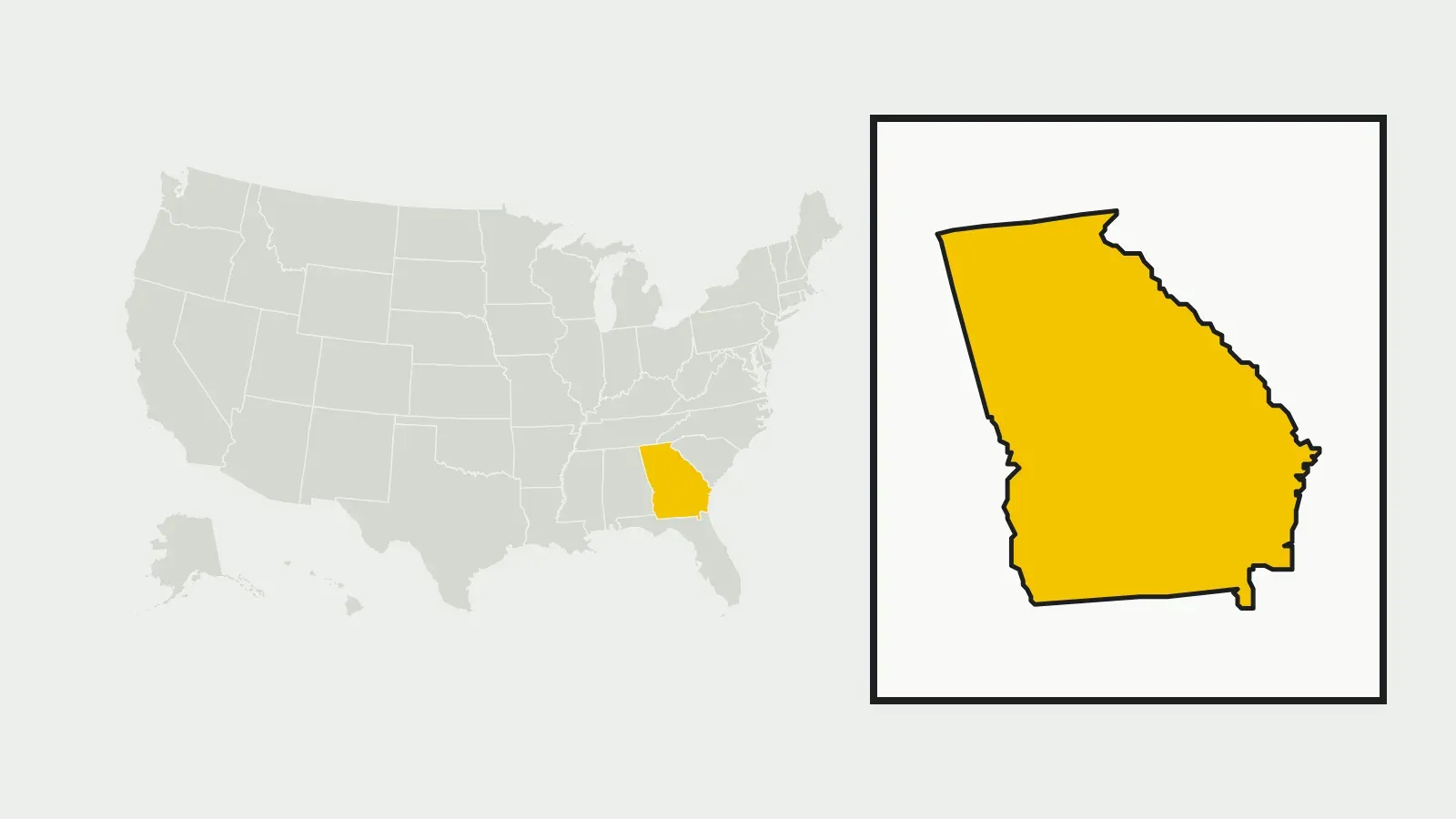
In short
Georgia's home energy rebates are open. The Georgia Environmental Finance Authority (GEFA) says the program fully launched in spring 2025 and had issued more than $50 million in rebates by August 12, 2026. Households at or below 200% of the federal poverty level can apply for weatherization through a local Community Action Agency. We could not confirm whether roofing needs a state license or how the state treats solar for property tax.
Georgia at a glance
Hiring a roofer in Georgia
Georgia's contractor law, Official Code section 43-41-17, says a person or business needs a license to engage in the business of residential contracting or commercial general contracting. The text sets no general dollar threshold and does not mention roofing. Whether a roofing job counts as residential contracting depends on definitions we could not open, so we have not confirmed a status for roofers. Ask the state's contractor licensing board before you sign.
The statute also exempts repair work when the contractor discloses that he or she is unlicensed and the work does not affect the structural integrity of the real property. Do not accept an exemption claim from a roofer on faith; ask for it in writing and check it with the board. The guide to hiring a contractor has the full question list.
- Ask the roofer for a state license number, then ask the licensing board whether your job needs one.
- Ask your city or county building office whether a roof replacement needs a permit and who pulls it.
- Ask for a certificate of insurance sent by the insurer.
- Get written estimates that name the shingle line, the underlayment and the flashing. The roof replacement project page shows what to compare.
Weatherization help for lower incomes
The weatherization program is posted on the GEFA site and funded by the U.S. Department of Energy and the Department of Health and Human Services. Household income cannot exceed 200% of the federal poverty level, and preference goes to the elderly, people with disabilities and families with children. Single-family homes, manufactured homes and multifamily buildings are eligible.
You apply through your local Community Action Agency, using the Apply for Weatherization link on the GEFA page. If you qualify, the agency sends an energy auditor to your home. The page warns that some counties have waiting lists. GEFA's main line is (404) 584-1000. See how weatherization and rebates work for what the work usually includes.
Home energy rebates: open
GEFA runs Georgia's Home Energy Rebates with federal money. A GEFA release dated August 12, 2026 says the program fully launched in spring 2025, has issued more than $50 million in rebates and has paths for single-family homes, multifamily buildings and do-it-yourself projects. Georgia's rebate page for appliance and electrification upgrades says households with income below 150% of area median income qualify, some upgrades must be installed by a GEFA-approved contractor, and rebates are not retroactive.
Solar and property tax
We could not confirm how Georgia treats the value a rooftop solar system adds to your home for property tax. The state's exemption chapter lists sections 48-5-40 through 48-5-57, and we could not read their text. Ask your county tax assessor whether the added value is exempt and whether you must apply, and get the answer in writing before you sign.
The federal 25D tax credit for rooftop solar ended for systems placed in service after December 31, 2025, so do not count on it for a 2026 install. Compare a quote against your own electric rate with the solar payback calculator, and read the rooftop solar project page first.
Insulation targets in Georgia's climate zones
A DOE Building America guide puts most Georgia counties in IECC zone 3A. Counties on the coast and in the south, such as Chatham, Glynn, Lowndes and Thomas, are in 2A. The northern mountain counties, such as Fannin, Rabun, Walker and Whitfield, are in 4A. That guide is the 2015 edition, so confirm your county with your building office.
ENERGY STAR's retrofit table for existing homes lists R-49 for an uninsulated attic in zones 2 and 3 and R-38 where 3 to 4 inches are already there. Zone 4A lists R-60 and R-49. Measure what you have with the attic insulation gap calculator.
| Georgia zone | Attic with none | Attic with 3-4 inches |
|---|---|---|
| 2A and 3A | R-49 | R-38 |
| 4A | R-60 | R-49 |
Common questions
Do I need a license to hire a roofer in Georgia?
We could not confirm it. State law requires a license for residential contracting but its text does not mention roofing. Ask the state's contractor licensing board and ask the roofer for a license number.
Are the Georgia home energy rebates open?
Yes. GEFA's release of August 12, 2026 says the program fully launched in spring 2025 and has issued more than $50 million. Apply before the work starts, because rebates are not retroactive.
Who qualifies for weatherization in Georgia?
Households with income at or below 200% of the federal poverty level, with preference for the elderly, people with disabilities and families with children. Apply through your local Community Action Agency.
Does a solar system raise my Georgia property tax?
We could not confirm the rule. Ask your county tax assessor whether the value a system adds is exempt and whether you must apply.
Sources
- GEFA: Weatherization Assistance Program
- GEFA: Home Energy Rebates press release, August 12, 2026
- Georgia Home Energy Rebates: appliance rebate FAQs
- Georgia Home Energy Rebates: about the program
- Official Code of Georgia 43-41-17: Contractor licensing requirement and exceptions
- U.S. Department of Energy: Building America guide to climate regions
- ENERGY STAR: Recommended insulation levels for existing homes
Facts checked on November 19, 2026 against the pages above. The GEFA release we read is dated August 12, 2026. We could not confirm whether roofing needs a state license or Georgia's solar property tax treatment; confirm both before you act.
Next on the job
-
Project
Roof replacement
Tear-off, squares, ventilation and the questions to ask before you sign a bid.
-
Guide
Hire a licensed contractor
Check the license, the insurance and the permit plan before you sign. Licensing is state law.
-
Guide
How energy rebates and weatherization work
Federal credits ended in 2025. What the Weatherization program and state HOMES and HEEHR rebates do now.