License required
South Carolina: help with roof, insulation and solar work
Two state boards oversee roofers, the big home energy rebates are not open, and small solar systems are exempt from property tax.
By RoofElm Editorial Team Updated 5 min read
- State roofer license
- License required
- Weatherization help
- Income up to 200% FPL
- HOMES and HEAR rebates
- Not open yet
- Solar property tax
- Exempt up to 20 kW
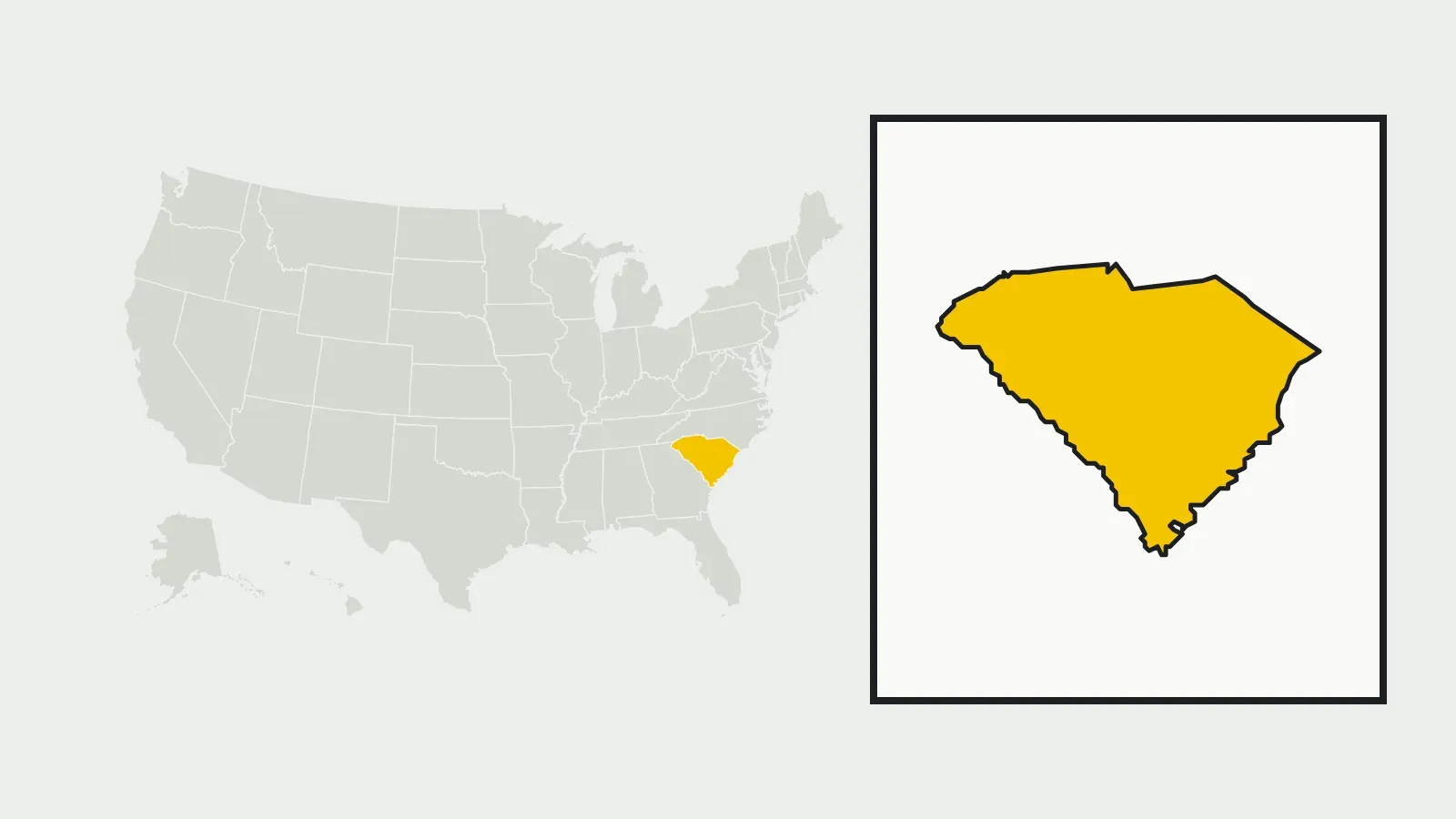
In short
South Carolina requires roofers to be state licensed or registered, through the Contractors' Licensing Board for larger jobs and the Residential Builders Commission for residential work above $500. The state's home energy rebates (HOMES and HEAR) are not open; the State Energy Office page says they are expected to launch in 2026 and gives no date. Households at or below 200% of the federal poverty level can apply for weatherization through a local community action agency, and renewable energy property of 20 kilowatts or less is exempt from property tax.
South Carolina at a glance
Roofers: two state boards
South Carolina splits roofing between two boards that sit under the state licensing agency, LLR. The Contractors' Licensing Board licenses roofing contractors under the Roofing classification, and the license is required for general contracting work whose total cost is above $10,000 (section 40-11-30). The Residential Builders Commission covers residential specialty contractors, and its FAQ lists a Roofer classification for work above $500. It requires a $5,000 surety bond when the total cost is above $5,000.
So a roofer on a house may hold a license from either board, depending on the job. Ask which one, and confirm it. Installing solar panels on a roof is limited as well: the Commission says it must be done by a licensed residential builder, a registered residential specialty contractor with a Roofer classification, or a general contractor with a roofing classification. Working without the required license is a misdemeanor under section 40-11-200, with up to one year in jail or a fine of up to $5,000.
- Ask the roofer which board holds the credential and the license or registration number, then check it with LLR.
- Ask for a certificate of insurance sent by the insurer, not a photocopy from the roofer.
- Ask your city or county building office whether a roof replacement needs a permit and who pulls it.
- Get at least two written estimates that name the shingle line, the underlayment and the flashing.
The guide to hiring a contractor has the full question list, and the roof replacement page shows what a good estimate contains.
Weatherization help for lower incomes
The Office of Economic Opportunity (OEO), part of the Department of Administration, runs the Weatherization Assistance Program, and community action agencies deliver it. A household qualifies when its combined income is at or below 200% of the federal poverty level, or when it receives certain HUD or USDA means-tested benefits that serve households at or below 80% of area median income, or a member received SSI in the previous 12 months.
You apply through a local agency, not through OEO. The State Energy Office also points homeowners to weatherization and to utility programs from Duke Energy, Dominion Energy and Santee Cooper for urgent upgrades while the rebates are closed. See how weatherization and rebates work for what the work usually includes.
Home energy rebates: planned, not open
The South Carolina Energy Office is setting up HOMES (whole-home) and HEAR (appliances and electrification). Its rebate page says "Rebates are not currently available," that the programs are "expected to launch statewide in 2026," and that final details are still in development. As planned, HOMES would pay $2,000 to $16,000 based on income and energy savings, and HEAR would pay up to $14,000 for households under 150% of county area median income.
With the year nearly over and no application open as of November 19, 2026, treat the 2026 target as unconfirmed. Contractors can file an interest form to join the approved network. A contractor who offers you a South Carolina HOMES or HEAR rebate today is promising something that does not exist. We track changes on the rule changes page.
Solar and property tax
South Carolina Code section 12-37-220(B)(53) exempts from ad valorem property tax a renewable energy resource property with a nameplate capacity of no greater than 20 kilowatts, measured in alternating current. That covers a typical home rooftop system. The exemptions in that subsection are subject to section 12-4-720, which we did not read, so ask your county assessor whether you must file anything.
The federal 25D tax credit for rooftop solar ended for systems placed in service after December 31, 2025, so do not count on it for a 2026 install. Compare a quote against your own electric rate with the solar payback calculator, and read the rooftop solar project page before you sign.
Insulation targets and climate zones
Your county's International Energy Conservation Code (IECC) climate zone sets your attic target, so get the zone from your building office or the code's county table before you buy insulation. The ENERGY STAR retrofit table for existing homes gives these figures in its "Add Insulation to Attic" columns. Then measure what you have with the attic insulation gap calculator.
| IECC zone | Attic with none | Attic with 3-4 inches |
|---|---|---|
| 2 and 3 | R-49 | R-38 |
| 4A and 4B | R-60 | R-49 |
| 4C through 8 | R-60 | R-49 |
Common questions
Do I need a license to hire a roofer in South Carolina?
Yes. Roofing is overseen by the Contractors' Licensing Board for jobs above $10,000 and by the Residential Builders Commission for residential specialty work above $500. Ask which credential the roofer holds.
Are the South Carolina HOMES and HEAR rebates open?
Not as of November 19, 2026. The State Energy Office says rebates are not currently available and that the programs are expected to launch in 2026, without a date.
Does my solar system raise my South Carolina property tax?
Renewable energy property of 20 kilowatts or less, measured in alternating current, is exempt under section 12-37-220(B)(53). Ask your county assessor whether a filing is needed.
Where do I apply for weatherization in South Carolina?
Apply through a local community action agency. The Office of Economic Opportunity sets the program, and households at or below 200% of the federal poverty level qualify.
Sources
- South Carolina Contractors' Licensing Board: Licensure with the Board
- South Carolina Contractors' Licensing Board: 2023 legislative update
- South Carolina Residential Builders Commission: FAQ
- South Carolina Code of Laws: Title 40, Chapter 11, Contractors
- South Carolina Code of Laws: Title 40, Chapter 59, Residential Builders
- South Carolina Office of Economic Opportunity: WAP 2026 draft state plan
- South Carolina Energy Office: Home energy rebates
- South Carolina Code of Laws: Title 12, Chapter 37, Property tax
Facts checked on November 19, 2026 against the pages above. Programs and rules change; confirm with the agency before you act.
Next on the job
-
Project
Roof replacement
Tear-off, squares, ventilation and the questions to ask before you sign a bid.
-
Guide
Hire a licensed contractor
Check the license, the insurance and the permit plan before you sign. Licensing is state law.
-
Guide
How energy rebates and weatherization work
Federal credits ended in 2025. What the Weatherization program and state HOMES and HEEHR rebates do now.