License required
California: help with roof, insulation and solar work
Roofers need a state license, the home energy rebates are only partly open, and the solar property tax exclusion has a 2027 sunset.
By RoofElm Editorial Team Updated 6 min read
- State roofer license
- License required
- Weatherization help
- Income limits apply
- HOMES and HEAR rebates
- Partly open
- Solar property tax
- Exclusion sunsets 2027
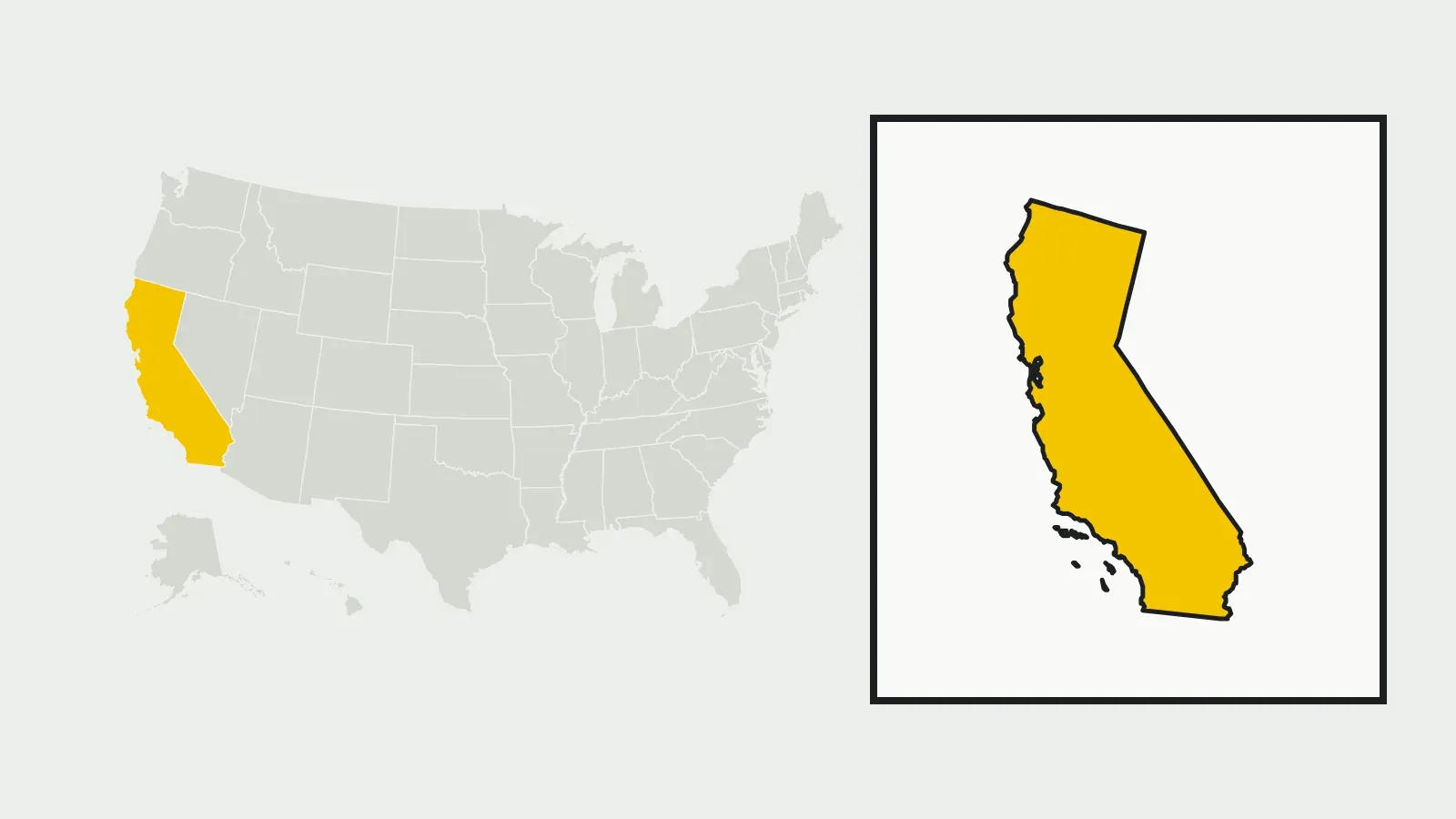
In short
California requires a contractor license for roofing work, with an exception only for minor jobs under $1,000 that need no permit. The home energy rebates are only partly open as of November 19, 2026: HOMES reaches low-income households through one program, and the single-family electrification rebates are fully reserved. Adding rooftop solar is not counted as new construction for property tax, but that rule ends on January 1, 2027, so timing matters.
California at a glance
Roofers: a state contractor license
California licenses contractors through the Contractors State License Board (CSLB), and roofing work is covered. Under Business and Professions Code section 7048 the licensing law does not apply only when the aggregate contract price for labor, materials and everything else is less than $1,000, the work is casual, minor or inconsequential, and no building permit is required. The exception also fails if the work is part of a larger project, if a job is split into contracts under $1,000, or if the person advertises as a contractor or hires others to help.
Treat a license as required for a roof replacement and for any roof job that needs a permit. Check the license with the CSLB before you sign, and use the guide to hiring a licensed contractor for the rest of the checks.
- Ask the roofer for the California license number and the license classification that covers roofing.
- Check with the CSLB that the license is active and in the company's name.
- Ask your city or county for the permit rule and who pulls the permit.
- Get the scope, the shingle line and the warranty in writing, as the estimate guide describes.
Weatherization help for lower incomes
The California Department of Community Services and Development (CSD) administers the federal Weatherization Assistance Program. It works with community-based local service providers that do the home assessments and install the measures. Eligibility depends on income, household size, energy use and other factors, and CSD may give priority to the elderly, people with disabilities and households with young children.
CSD publishes a monthly income table effective July 1, 2026. It lists $2,660 for a household of one and $5,500 for a household of four, and it says eligibility may vary with the sources of income. To start, contact the local service provider for your county. See how weatherization and rebates work for what the work usually includes.
Home energy rebates: partly open
California's rebates run through the California Energy Commission (CEC) in separate pieces, and they differ in status. This is what the CEC page showed when we read it on November 19, 2026.
- HOMES, direct install: the only way to get a HOMES rebate now. It serves qualified low-income households in under-resourced communities, needs at least 20% modeled energy savings, and the CEC says the U.S. Department of Energy approved its launch in November 2026.
- HEEHRA, single-family: the CEC's name for the electrification rebates. Phase I rebates were fully reserved as of August 31, 2026, and no new reservations are issued.
- HEEHRA, multifamily: still available statewide. Phase II is under development with no date.
- HOMES, pay for performance: not approved to launch. The CEC has issued a solicitation for a statewide implementer.
The CEC page has no update date, and its own Q&A still describes reservations as open, which conflicts with the full-reservation notice. Confirm with the program administrator before you buy equipment because of a rebate. We list changes on the rule changes page.
Solar and property tax
Under Revenue and Taxation Code section 73, an active solar energy system is not counted as new construction, so adding one does not raise your assessed value for that reason. For most owners the exclusion needs no filing, and it lasts until the property changes ownership.
The federal 25D tax credit for rooftop solar ended for systems placed in service after December 31, 2025. Compare a quote against your own electric rate with the solar payback calculator, and read the rooftop solar project page before you sign.
Insulation targets in California climate zones
California counties fall in zones 2B, 3B, 3C, 4B, 4C, 5B and 6B. Los Angeles, San Diego, Sacramento and Fresno are zone 3B, and Bay Area counties such as San Francisco and Alameda are 3C. For an existing attic, the ENERGY STAR retrofit table recommends R-49 in zones 2 and 3 with no insulation and R-38 with 3 to 4 inches, and R-60 and R-49 in zones 4, 5 and 6. Measure what you have with the attic insulation gap calculator.
| California zone | Attic with none | Attic with 3-4 inches |
|---|---|---|
| 2B, 3B and 3C (Imperial, Los Angeles, San Francisco) | R-49 | R-38 |
| 4B, 4C, 5B and 6B (Humboldt, Siskiyou, Mono) | R-60 | R-49 |
Common questions
Do I need a license to hire a roofer in California?
Yes for almost any roof job. The only exception in the law is casual, minor work under $1,000 that needs no permit, is not part of a larger project, and is not advertised by a contractor. Check the license with the CSLB.
Are the California HOMES and HEAR rebates open?
Partly. On the CEC page we read on November 19, 2026, HOMES is limited to the low-income direct install program, HEEHRA single-family rebates are fully reserved, and HOMES pay for performance is not approved to launch.
Who qualifies for weatherization in California?
Eligibility depends on income, household size, energy use and other factors. CSD's table effective July 1, 2026 lists $2,660 a month for one person. Contact your county's local service provider.
Does rooftop solar raise my California property tax?
Not as new construction, under Revenue and Taxation Code section 73, if the system qualifies. The section ends January 1, 2027, and systems that qualify before then stay excluded until the next change in ownership.
Sources
- California Business and Professions Code 7048: Contractors licensing exemption
- California CSD: Weatherization Assistance Program
- California CSD: WAP income eligibility
- California Energy Commission: Inflation Reduction Act residential energy rebate programs
- California Revenue and Taxation Code 73: Active solar energy systems
- California State Board of Equalization: Letter to Assessors 2024/031
- ENERGY STAR: Recommended insulation levels for existing homes
- Pacific Northwest National Laboratory: Guide to determining climate regions by county
Facts checked on November 19, 2026 against the pages above. The CEC rebate page shows no update date, and the code sections come from Justia copies that may lag the official text. Programs and rules change; confirm with the agency before you act.
Next on the job
-
Project
Roof replacement
Tear-off, squares, ventilation and the questions to ask before you sign a bid.
-
Guide
Hire a licensed contractor
Check the license, the insurance and the permit plan before you sign. Licensing is state law.
-
Guide
How energy rebates and weatherization work
Federal credits ended in 2025. What the Weatherization program and state HOMES and HEEHR rebates do now.