No state license found
Colorado: help with roof, insulation and solar work
We found no state roofer license, so cities decide. Weatherization help and HEAR rebates are running, and home solar is exempt from property tax.
By RoofElm Editorial Team Updated 6 min read
- State roofer license
- None found
- Weatherization help
- Income limits by county
- HOMES and HEAR rebates
- HEAR open; HOMES unclear
- Solar property tax
- Exempt by statute
In short
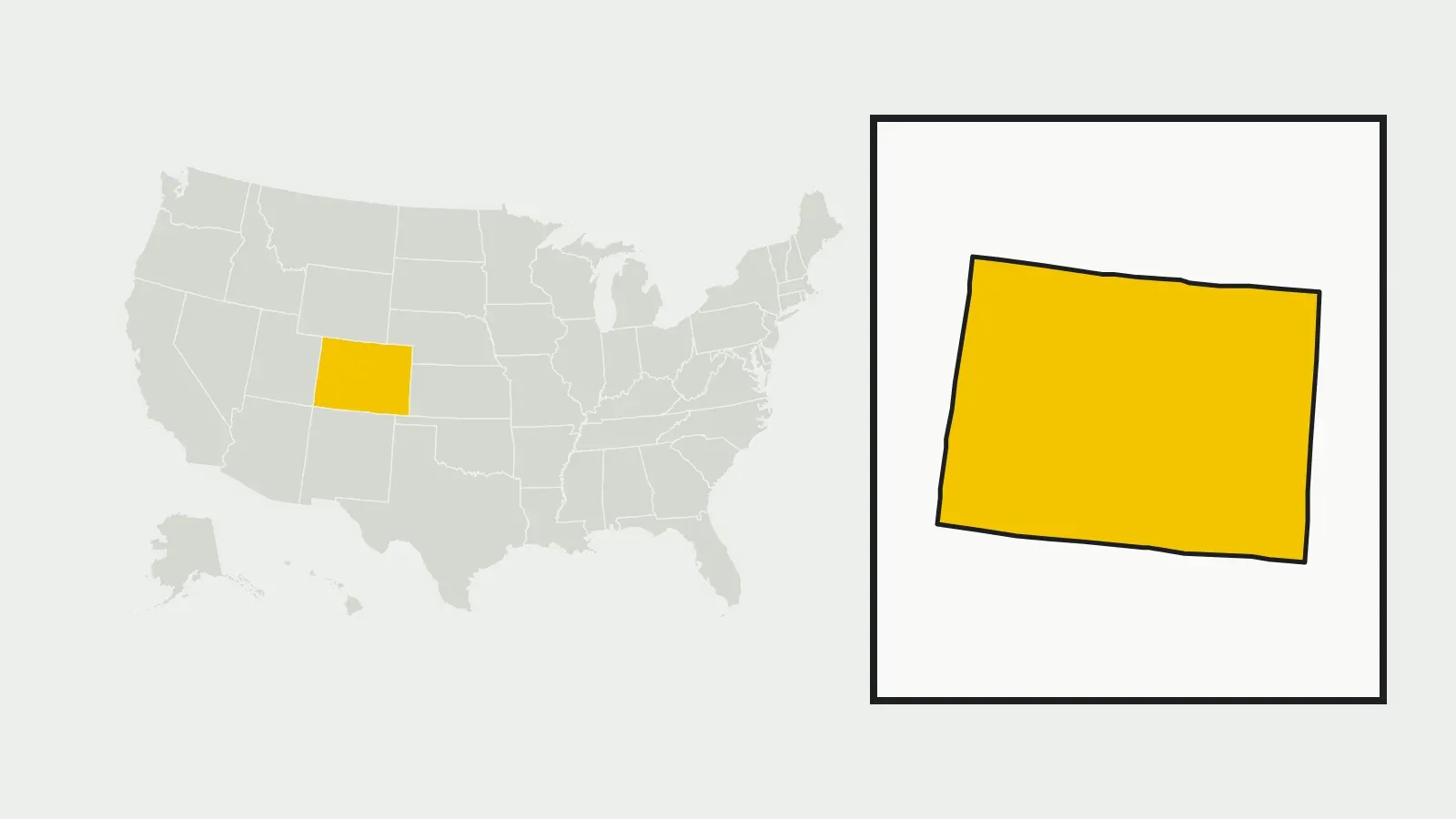
We found no Colorado state license for roofers, so the permit rule and any roofer registration come from your city or county. The Energy Office says its HEAR rebates are now available to single-family households through registered contractors, but we could not confirm that the HOMES-type efficiency rebates have opened as of November 19, 2026. State law exempts an independently owned residential solar electric system from property tax.
Colorado at a glance
Roofers: no state license found, check locally
We did not find a Colorado state license for roofers. The home page of the Department of Regulatory Agencies' Division of Professions and Occupations lists its licensed professions, and contractors are not among them. We did not find a statute either way, so confirm with your building department. That leaves the work to you and your city or county, which may require a contractor license or registration and a building permit for a roof replacement.
Before you sign, call the building department and ask what the town requires. The guide to hiring a licensed contractor has the full list of questions, and the roof replacement project page shows what a good estimate contains.
- Ask your city or county building department whether a roof replacement needs a permit, who pulls it, and whether the town licenses or registers roofers.
- If the town requires a license or registration, ask the roofer for the number and check it with the town.
- Ask for a certificate of insurance sent by the insurer, not a photocopy from the roofer.
- Get at least two written estimates that name the shingle line, the underlayment and the flashing.
Weatherization help for lower incomes
The Colorado Energy Office runs the Weatherization Assistance Program through local partner agencies. Eligibility depends on county, household size and income, measured against area median income, state median income or the federal poverty line, and the Energy Office publishes an income chart by county. Households that receive TANF, SSI, SNAP or LIHEAP may qualify automatically. Meeting the limit does not guarantee service, because funding and waitlists apply.
You apply online, or ask your local provider to mail a paper application. After approval, a home energy audit lists the work, a crew does it, and an inspection confirms it. Renters need the landlord's permission, manufactured homes may qualify but RVs do not, and homes weatherized within the past 15 years are not eligible. See how weatherization and rebates work for what the work usually includes.
Home energy rebates: HEAR open, HER unclear
Colorado runs the federal rebates through the Colorado Energy Office as the Colorado Home Energy Rebate Program. Its Home Electrification and Appliance Rebates (HEAR) first reached households through the Weatherization Assistance Program in October 2024. The Energy Office's rebate page, which shows no date, says HEAR rebates are now available to single-family households through registered contractors, after a planned mid-November 2025 start. Households below 80% of county area median income can get up to 100% of eligible costs, and households from 80% to 150% up to 50%. The Energy Office's FAQ puts the cap at $14,000 per household.
The Energy Office calls the efficiency rebates Home Efficiency Rebates (HER). They are the whole-home program the federal rules call HOMES, and the page planned them for early 2026 for manufactured and mobile homes and for large multifamily buildings. We could not confirm that they have opened, so check the Energy Office page before you plan around them. A registered contractor applies the rebate to your project price, so ask for that in writing. We list changes on the rule changes page.
Solar and property tax
Colorado exempts an independently owned residential solar electric system from property tax. C.R.S. 39-3-102 treats it as a household furnishing, exempt unless the system produces income for the owner of the home. For this purpose, rebates, offsets, credits and reimbursements under section 40-2-124 do not count as income. The Division of Property Taxation says the exemption covers the equipment only, not the real property under it, and it describes qualifying systems as on residential real property, producing electricity mainly for the home, at 100 kilowatts AC or less.
Neither the statute nor the division's page mentions an application, so ask your county assessor whether one is needed. The federal 25D tax credit for rooftop solar ended for systems placed in service after December 31, 2025. Compare a quote against your own electric rate with the solar payback calculator, and read the rooftop solar project page first.
Insulation targets in Colorado climate zones
Colorado counties fall in energy code climate zones 4B, 5B, 6B and 7B. Most counties, including Denver, Boulder, El Paso and Larimer, are zone 5B. Baca, Las Animas and Otero are 4B. Alamosa, Chaffee, Eagle and Moffat are among the 6B counties, and Clear Creek, Gunnison, Pitkin, Routt and Summit are among the 7B counties. In every one of these zones the ENERGY STAR retrofit table recommends R-60 for an attic with no insulation and R-49 for one with 3 to 4 inches. Measure what you have with the attic insulation gap calculator.
| Colorado zone | Attic with none | Attic with 3-4 inches |
|---|---|---|
| 4B (Baca, Las Animas, Otero) | R-60 | R-49 |
| 5B (Denver, Boulder, El Paso, Larimer) | R-60 | R-49 |
| 6B (Alamosa, Eagle, Moffat) | R-60 | R-49 |
| 7B (Gunnison, Routt, Summit) | R-60 | R-49 |
Common questions
Do I need a license to hire a roofer in Colorado?
We found no state roofing license. Your city or county may require a contractor license or registration and a permit, so call the building department and ask the roofer for proof of insurance.
Are the Colorado HOMES and HEAR rebates open?
The Energy Office says HEAR rebates are available to single-family households through registered contractors. We could not confirm that the efficiency rebates, which it calls HER and the federal rules call HOMES, have opened as of November 19, 2026.
Who qualifies for weatherization in Colorado?
Eligibility depends on county, household size and income, and the Energy Office publishes a chart by county. Households that receive TANF, SSI, SNAP or LIHEAP may qualify automatically.
Does my solar system raise my Colorado property tax?
An independently owned residential solar electric system is exempt under C.R.S. 39-3-102 unless it produces income for the owner. Ask your county assessor whether a filing is needed.
Sources
- Colorado Energy Office: Weatherization Assistance Program
- Colorado Energy Office: Colorado Home Energy Rebate Program
- Colorado Energy Office: Home Energy Rebate Program FAQ
- Colorado Division of Property Taxation: Renewable energy
- Colorado Revised Statutes 39-3-102: Household furnishings and residential solar
- Colorado Division of Professions and Occupations: Licensed professions
- ENERGY STAR: Recommended insulation levels for existing homes
- Pacific Northwest National Laboratory: Guide to determining climate regions by county
Facts checked on November 19, 2026 against the pages above. The Energy Office rebate pages show no update date, so the rebate status is the one we read that day. Programs and rules change; confirm with the agency before you act.
Next on the job
-
Project
Roof replacement
Tear-off, squares, ventilation and the questions to ask before you sign a bid.
-
Guide
Spot a roofing or storm chaser scam
Door-knockers after a storm, deductible offers and claim assignments: the warning signs and who to call.
-
Guide
How energy rebates and weatherization work
Federal credits ended in 2025. What the Weatherization program and state HOMES and HEEHR rebates do now.