Registration required
Connecticut: help with roof, insulation and solar work
Roofers must register with the state, weatherization help is available, and home solar is exempt from property tax if you file by November 1.
By RoofElm Editorial Team Updated 6 min read
- State roofer license
- Registration required
- Weatherization help
- Income up to 60% of SMI
- HOMES and HEAR rebates
- Not open per DEEP
- Solar property tax
- Exempt; apply by Nov. 1
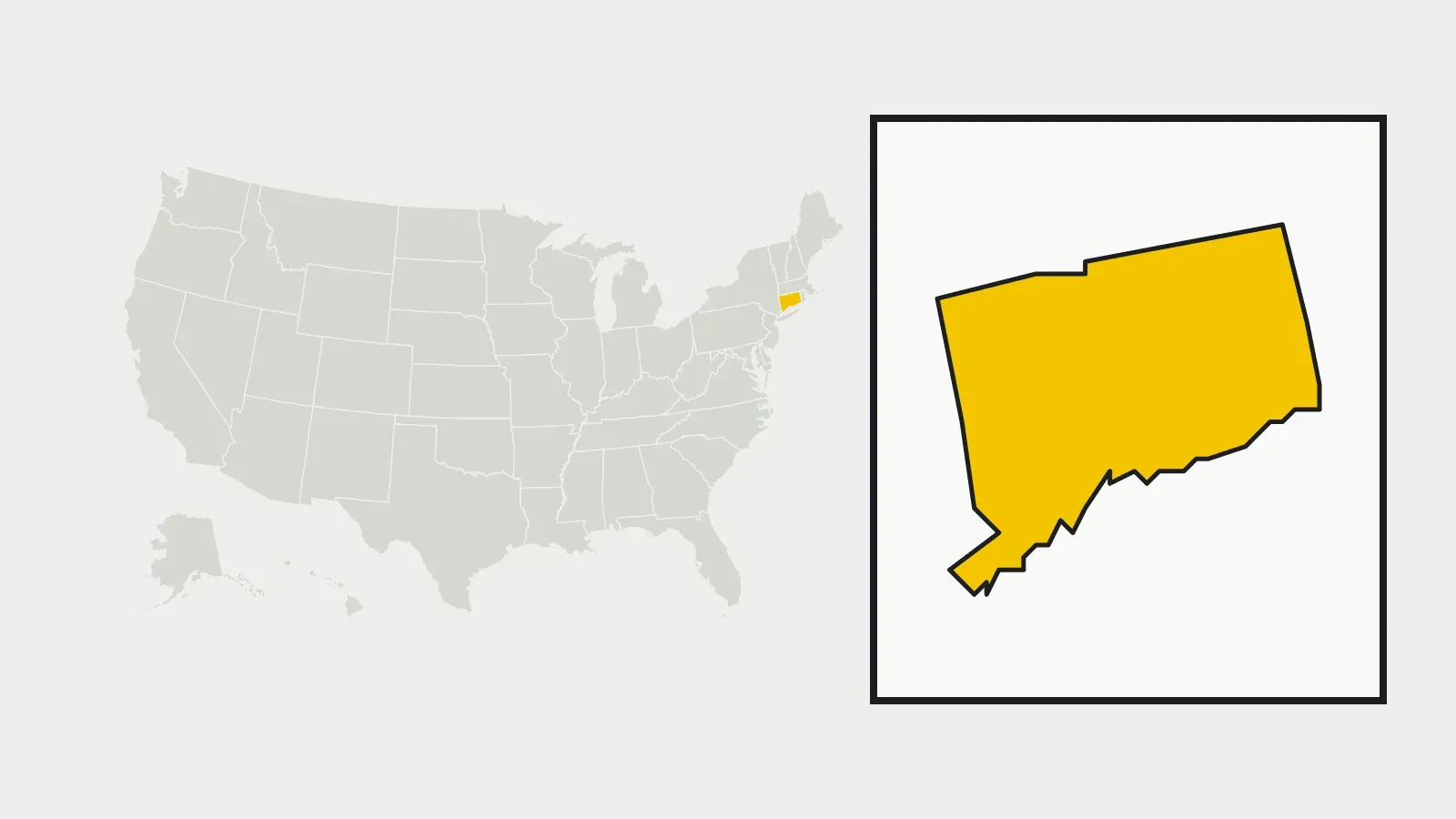
In short
Connecticut requires home improvement contractors to register with the Department of Consumer Protection, and the department lists roofs as home improvement work. A contract that lacks the required terms is not enforceable against you. The state's HOMES and HEAR rebate page, last updated in July 2025, says neither program is open, and we found no newer notice as of November 19, 2026. Home solar electric systems are exempt from property tax, but you must file with your assessor by November 1.
Connecticut at a glance
Roofers: home improvement registration
Connecticut handles roofers through registration. Under the Home Improvement Act, an individual or business that contracts with a consumer for work on residential property must register with the Department of Consumer Protection (DCP), and the DCP lists roofs among the work that counts as home improvement. Exclusions include work on your own property, subcontracted work, commercial property, new-home construction, work covered by a trade license and contracts under $200.
DCP's materials give different dollar lines. Its application page excludes contracts under $200, while its registration manual says a contractor must register once home improvement contracts pass $1,000 in 12 consecutive months. Ask DCP which applies if your job is small. A roof replacement is a large contract, so ask for the registration number before you sign. The guide to hiring a licensed contractor has the full list of questions.
- Ask the roofer for the DCP registration number, and confirm it with DCP at dcp.licenseservices@ct.gov.
- Check that the contract shows the contractor's name, address and registration number, and states the whole agreement.
- Look for the notice of cancellation, which gives you until midnight of the third business day.
- Ask your town building office whether the job needs a permit and who pulls it.
Weatherization help for lower incomes
The Department of Energy and Environmental Protection (DEEP) runs the Connecticut Weatherization Assistance Program with the state's Community Action Agency network. Eligibility is 60% of the state median income, the same test the Connecticut Energy Assistance Program uses. Priority goes to elderly residents, people with disabilities, families with children and high-energy users. In a multifamily building, at least two-thirds of the tenants must be income-eligible.
Applications go through the joint form used with the energy assistance program, and 2-1-1 can point you to an intake site. To apply for weatherization directly, email DEEP.Weatherization@ct.gov. A home generally cannot be weatherized if weatherization, LIHEAP, HUD or USDA work was done in the last 15 years. See how weatherization and rebates work for what the work usually includes.
Home energy rebates: not open per DEEP
DEEP runs the federal rebates and is contracting with the state's regulated electric utilities to administer most of the money. Its page lists $49,830,560 for the Home Efficiency Rebates (HER, formerly HOMES) and $49,732,517 for the Home Electrification and Appliance Rebates (HEAR). The page, last updated in July 2025, says neither program is open until the U.S. Department of Energy approves the state's plans, and it targeted a mid-2025 launch for HEAR and an early 2026 launch for HER.
We found no newer notice, so we cannot say that either program has opened as of November 19, 2026. Email DEEP.EnergyBureau@ct.gov for the current status, and do not buy equipment because a seller mentions a rebate you cannot yet apply for. We list changes on the rule changes page.
Solar and property tax
Connecticut exempts a residential solar electric system from property tax, but you have to ask. Under Connecticut General Statutes section 12-81, subdivision 57, a Class I renewable energy source that generates electricity for private residential use is exempt if it was installed on or after October 1, 2007, its estimated annual production does not exceed its estimated annual load, and it serves a single-family home, a two-to-four-unit dwelling or a farm. Net metering does not disqualify it.
File with your town assessor by November 1, on the state's form, with the estimated annual load and production. Missing the deadline waives the exemption for that year, and an altered system needs a new application. The federal 25D tax credit ended for systems placed in service after December 31, 2025. Compare a quote against your own electric rate with the solar payback calculator, and read the rooftop solar project page first.
Insulation targets in Connecticut climate zones
All eight Connecticut counties, including Fairfield, Hartford and New Haven, are in energy code climate zone 5A in the Department of Energy's county guide. For an existing attic, the ENERGY STAR retrofit table recommends R-60 if the attic has no insulation and R-49 if it already has 3 to 4 inches. Measure what you have with the attic insulation gap calculator.
| Connecticut zone | Attic with none | Attic with 3-4 inches |
|---|---|---|
| 5A (all eight counties) | R-60 | R-49 |
Common questions
Do I need a license to hire a roofer in Connecticut?
Connecticut asks home improvement contractors to register with the Department of Consumer Protection, and the department lists roofs as home improvement work. Ask for the registration number and confirm it with DCP before you sign.
Are the Connecticut HOMES and HEAR rebates open?
DEEP's page, last updated in July 2025, says neither is open. We found no newer notice as of November 19, 2026. Email DEEP.EnergyBureau@ct.gov for the current status.
Who qualifies for weatherization in Connecticut?
Households at or below 60% of the state median income, the same test as the Connecticut Energy Assistance Program. Apply through the joint application, and call 2-1-1 to find an intake site.
Does my solar system raise my Connecticut property tax?
A residential Class I solar electric system is exempt under section 12-81 if it meets the conditions, but you must file with your town assessor by November 1 or lose the exemption for that year.
Sources
- Connecticut DCP: Home improvement applications and who must register
- Connecticut DCP: Home improvement contractor registration manual
- Connecticut General Statutes 20-420: Registration required
- Connecticut DEEP: Weatherization in Connecticut
- Connecticut DEEP: Inflation Reduction Act home energy rebate programs
- Connecticut General Statutes chapter 203: Property tax, section 12-81
- ENERGY STAR: Recommended insulation levels for existing homes
- Pacific Northwest National Laboratory: Guide to determining climate regions by county
Facts checked on November 19, 2026 against the pages above. DEEP's rebate page was last updated in July 2025, and we found no newer status. Programs and rules change; confirm with the agency before you act.
Next on the job
-
Project
Roof replacement
Tear-off, squares, ventilation and the questions to ask before you sign a bid.
-
Guide
Hire a licensed contractor
Check the license, the insurance and the permit plan before you sign. Licensing is state law.
-
Guide
How energy rebates and weatherization work
Federal credits ended in 2025. What the Weatherization program and state HOMES and HEEHR rebates do now.