No state roofer license
Maine: help with roof, insulation and solar work
The state does not license home contractors, but a written contract is required above $3,000 and your first payment is capped.
By RoofElm Editorial Team Updated 5 min read
- State roofer license
- None
- Weatherization help
- Income-based, via CAP
- HOMES and HEAR rebates
- HEAR limited, HER not open
- Solar property tax
- Exemption, you file
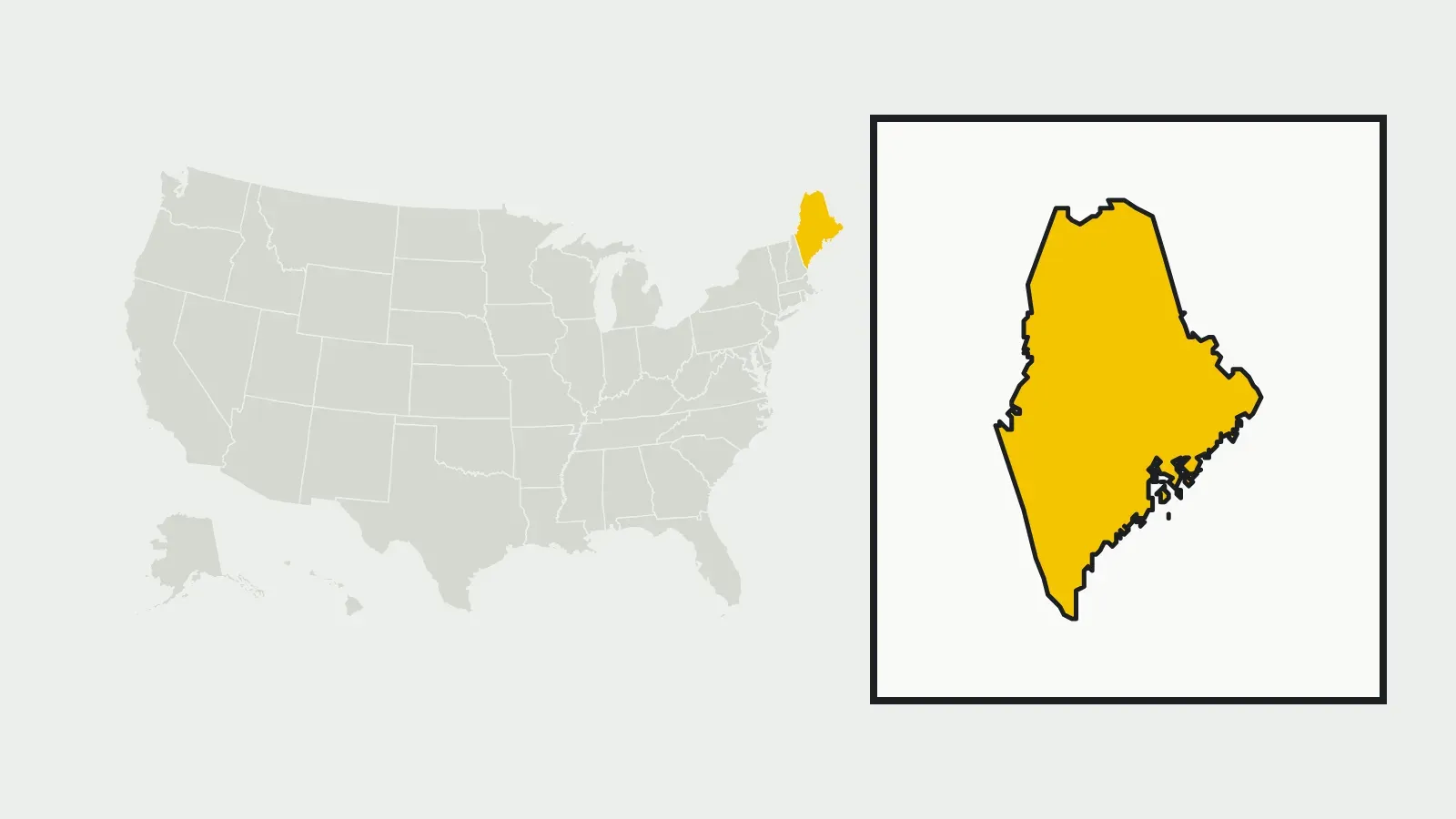
In short
Maine does not license or regulate home contractors, so the check is yours, but state law requires a written contract for any job over $3,000 and caps the first payment at one-third of the price. MaineHousing runs weatherization for income-eligible homeowners and renters through local community action agencies. The federal home energy rebates are only partly open: the appliance and electrification rebates (HEAR) are live for two narrow initiatives, and the whole-home rebates (HER) were still awaiting federal approval in the latest note the state posts. Solar equipment can be exempt from property tax if you file with your assessor.
Maine at a glance
Roofers: no state license, but a contract law
The Maine Attorney General's consumer page says Maine does not license or regulate home contractors. It does not name roofers, so treat roofing the same way: nobody can show you a state roofing license. What Maine does have is the Home Construction Contracts law, 10 M.R.S. section 1487. A home construction or repair contract involving more than $3,000 in materials or labor must be in writing and signed by you and the contractor, and you must both get a fully signed copy before work starts.
The law lists what the contract must say: the full price, the payment method, a description of the work and materials, start and substantial completion dates, a warranty statement, and a rule that any change that alters the price needs a written change order. The first payment cannot exceed one-third of the total price. If the contract falls under door-to-door sales law, it must also state your right to cancel. The guide to hiring a contractor covers the other checks, and the roof replacement project page shows what a good estimate contains.
- Ask your town office whether a roof replacement needs a permit and who pulls it.
- Ask each roofer for a certificate of insurance sent by the insurer, not a photocopy.
- Insist on a signed written contract for anything over $3,000, with the shingle line, underlayment and flashing named.
- Pay no more than one-third up front, and keep the final payment until cleanup and sign-off.
Weatherization help for lower incomes
MaineHousing runs the Weatherization Program and delivers it through the state's Community Action Program (CAP) agencies. Grants pay for efficiency work such as insulation and weather-stripping, plus some related safety repairs. Income-eligible homeowners, income-eligible renters (with the owner's approval before work starts) and owners of eligible two- to four-unit buildings can apply.
The MaineHousing page does not state the income limit; it points to the income chart for the Home Energy Assistance Program (HEAP). Applying for HEAP through your local CAP agency automatically considers you for weatherization, and MaineHousing's number is 207-626-4600, extension 57433. Homes weatherized in the last 15 years, and homes with serious structural, electrical, heating or moisture problems, can have the work postponed. See how weatherization and rebates work for what crews usually do.
Home energy rebates: partly open
The Maine Department of Energy Resources holds nearly $72 million in federal home energy rebate money, and Efficiency Maine Trust runs the programs. On November 19, 2026, the state's page says the appliance and electrification rebates (HEAR) are live, but only for two initiatives: heat pumps in new affordable multifamily housing and a manufactured home initiative. The whole-home rebates (HER, the program the federal government calls HOMES) were still pending with the U.S. Department of Energy in the latest dated note on that page, from June 2025.
The page shows no newer update, so check Efficiency Maine before you buy anything because of a rebate. A typical single-family roof or attic job does not qualify for HEAR today. We list status changes on the rule changes page.
Solar and property tax
Maine exempts solar energy equipment that generates heat or electricity from property tax under 36 M.R.S. section 656, paragraph 1(L), for property tax years beginning on or after April 1, 2025. The equipment qualifies if all of its energy is used on the site, if it sits with net energy billing customers who subscribe to at least half its output, or if its power goes through the utility grid for bill credits and the interconnection agreement was signed before June 1, 2024.
The exemption is not automatic. On or before April 1 of the first property tax year you claim it, you file a report with your assessor on the State Tax Assessor's form. Ask the assessor how a system on your home is treated. The federal 25D tax credit ended for systems placed in service after December 31, 2025, so the state exemption is now the main public incentive to count on. Compare a quote with the solar payback calculator and read the rooftop solar project page first.
Insulation targets in Maine climate zones
The Department of Energy county table puts Maine in IECC climate zone 6A, with Aroostook County in zone 7. The Energy Star retrofit table gives one target for both: about R-60 if the attic has no insulation, and R-49 if it already has 3 to 4 inches. Measure what you have with the attic insulation gap calculator before you ask for bids.
| Maine zone | Attic with none | Attic with 3-4 inches |
|---|---|---|
| 6A | R-60 | R-49 |
| 7 (Aroostook County) | R-60 | R-49 |
Common questions
Do I need a license to hire a roofer in Maine?
You do not need to look for a state license, because the Attorney General says Maine does not license or regulate home contractors. Ask for proof of insurance and a signed written contract.
When must a Maine home repair contract be in writing?
When the job involves more than $3,000 in materials or labor. Both sides sign, both get a signed copy before work starts, and the first payment cannot exceed one-third of the price.
Are the Maine HOMES and HEAR rebates open?
Only in part. HEAR is live for two narrow initiatives, and the whole-home HER rebates were still awaiting federal approval in the state's latest dated note, from June 2025.
Does my solar system raise my Maine property tax?
Qualifying solar equipment is exempt under 36 M.R.S. section 656, but you must file a report with your assessor by April 1 of the first year you claim it.
Sources
- Maine Attorney General: Home construction contracts
- Maine Revised Statutes, Title 10, section 1487: Home construction contracts
- MaineHousing: Weatherization Program
- Maine Department of Energy Resources: Home energy rebates
- Maine Revised Statutes, Title 36, section 656: Property tax exemptions
- ENERGY STAR: Recommended insulation levels for existing homes
- U.S. Department of Energy: Building America climate region guide, county table
Facts checked on November 19, 2026 against the pages above. The latest dated note on the state rebate page is from June 2025. Programs and rules change; confirm with the agency before you act.
Next on the job
-
Project
Roof replacement
Tear-off, squares, ventilation and the questions to ask before you sign a bid.
-

Guide
Hire a licensed contractor
Check the license, the insurance and the permit plan before you sign. Licensing is state law.
-
Guide
How energy rebates and weatherization work
Federal credits ended in 2025. What the Weatherization program and state HOMES and HEEHR rebates do now.