No state license found
New Hampshire: help with roof, insulation and solar work
We found no state roofing license, the federal home energy rebates are not open yet, and the solar tax break depends on your town.
By RoofElm Editorial Team Updated 5 min read
- State roofer license
- None found
- Weatherization help
- Income up to 60% of SMI
- HOMES and HEAR rebates
- Not open yet
- Solar property tax
- Town option, you apply
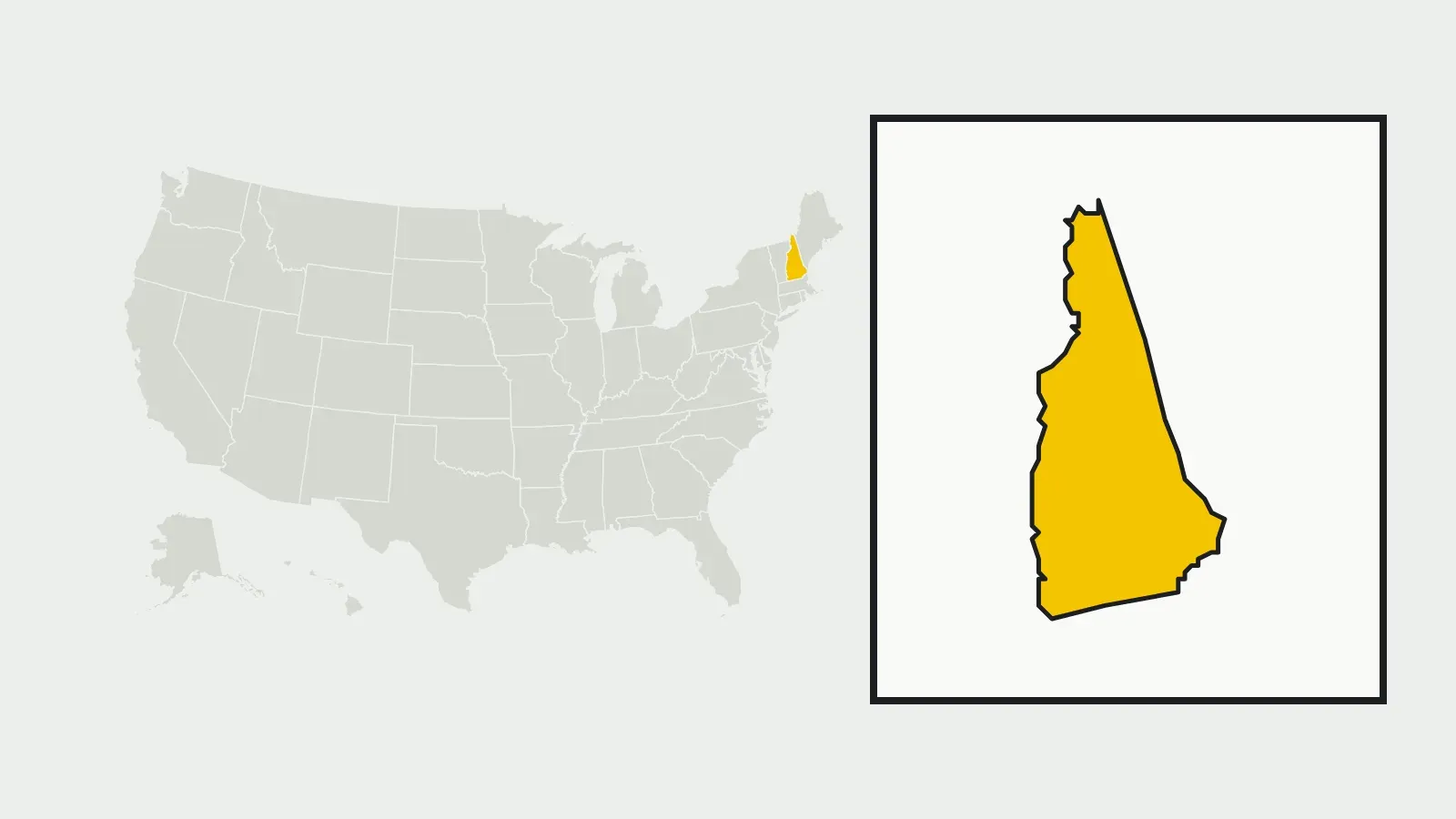
In short
We found no New Hampshire state license for roofers, so the checking falls to you: ask your town about permits and ask the roofer for proof of insurance. The state energy department says its federal home energy rebates (HOMES and HEAR) are not available to consumers yet. Low-income households can apply for weatherization through a local Community Action Agency, and a solar system's added value is exempt from property tax only if your town has adopted the exemption and you file for it.
New Hampshire at a glance
Roofers: no state license found, check locally
As of November 19, 2026 we found no New Hampshire state license for roofing contractors. We could not open an official state licensing page that says so outright, and only a third-party licensing guide states it plainly. Treat that as unconfirmed: before you sign, ask the state's Office of Professional Licensure and Certification whether anything has changed, and ask your town what it requires.
Without a state license, the checking is yours. The guide to hiring a contractor has the full list of questions, and the roof replacement project page shows what a good estimate contains.
- Ask your town or city building office whether a roof replacement needs a permit and who pulls it. See permits and inspections.
- Ask each roofer for a certificate of insurance sent by the insurer, not a photocopy from the roofer.
- Get at least two written estimates that name the shingle brand and line, the underlayment, the flashing and the ice-and-water membrane.
- Hold the final payment until the cleanup is done and any permit is signed off.
Weatherization help for lower incomes
The New Hampshire Department of Energy (NHDOE) runs the Weatherization Assistance Program with federal grants from the U.S. Department of Energy and the U.S. Department of Health and Human Services. It contracts with the state's Community Action Agencies, and they deliver the work. Households must be low-income. NHDOE's page says the limit was changed from 200% of the federal poverty guidelines to 60% of State Median Income, so use the current table, not a number from an older article.
You apply through your local Community Action Agency. If you qualify on income, your application goes on a waiting list. An energy auditor certified by the Department of Energy or the Building Performance Institute then visits for an audit with diagnostic testing, and the cost-effective improvements are installed in order of highest savings. Questions go to Weatherization@energy.nh.gov. For what the work usually includes, read how weatherization and rebates work.
Home energy rebates: planned, not open
NHDOE is to run two federal Inflation Reduction Act programs: Home Efficiency Rebates (the whole-home program called HOMES in federal documents) and Home Electrification and Appliance Rebates (HEAR). On November 19, 2026 the pages we read for both say the funding is not available to New Hampshire consumers. Those pages still carry 2024 update dates, May 1 and June 26, 2024, so details on them may be out of date.
The HEAR page describes rebates for households up to 150% of area median income, capped at $14,000 combined, for projects started after the program opens. Work already finished does not qualify. We could not find a launch date, and a contractor who promises one of these rebates today is promising something that does not exist yet. We list this on the rule changes page and will update it when NHDOE opens the programs.
Solar and property tax
New Hampshire does not exempt solar statewide. RSA 72:62 lets each city and town adopt an exemption for solar energy systems, so your system is exempt only if your town has adopted it. RSA 72:61 defines a system to include photovoltaic panels that supply a building's electricity. Where adopted, the exemption reduces the assessed value used to compute your tax.
The Department of Revenue Administration's solar exemption report says owners claim it by filing form PA-29 with the municipality. Ask your assessor whether your town adopted the exemption, what it covers and when the filing deadline falls. The federal 25D tax credit for rooftop solar ended for systems placed in service after December 31, 2025, so check a quote with the solar payback calculator and read the rooftop solar project page before you sign.
Insulation targets in New Hampshire climate zones
New Hampshire counties fall in energy code climate zones 5A and 6A, according to the Department of Energy's county guide. ENERGY STAR's retrofit table recommends R-60 for an attic with no insulation and R-49 for one that already has 3 to 4 inches. Measure what you have with the attic insulation gap calculator.
| Zone | Counties | Attic with none | Attic with 3-4 inches |
|---|---|---|---|
| 5A | Cheshire, Hillsborough, Rockingham, Strafford | R-60 | R-49 |
| 6A | Belknap, Carroll, Coos, Grafton, Merrimack, Sullivan | R-60 | R-49 |
Common questions
Do I need a license to hire a roofer in New Hampshire?
We found no state roofing license, but we could not confirm that on an official state page. Ask the Office of Professional Licensure and Certification, check your town's permit rules, and ask the roofer for proof of insurance.
Who can get weatherization help in New Hampshire?
Low-income households. The Department of Energy's page says the limit is 60% of State Median Income. Apply through your local Community Action Agency; you go on a waiting list until an audit is scheduled.
Are the New Hampshire HOMES and HEAR rebates open?
Not according to the state energy department's pages we read on November 19, 2026, which say funding is not available to consumers. Check the NHDOE homeowner funding page before you buy anything because of a rebate.
Does my solar system raise my New Hampshire property tax?
It can, if your town has not adopted the RSA 72:62 exemption. Where a town has adopted it, the exemption reduces the assessed value, and you file for it with the town.
Sources
- NH Department of Energy: Weatherization Assistance Program
- NH Department of Energy: Home Efficiency Rebates program
- NH Department of Energy: Home Electrification and Appliance Rebates
- New Hampshire RSA 72:62, Exemption for solar energy systems
- New Hampshire RSA 72:61, Definitions for solar energy systems (Justia)
- NH Department of Revenue Administration: Solar exemption report
- U.S. Department of Energy: Guide to determining climate regions by county
- ENERGY STAR: Recommended home insulation R-values
Facts checked on November 19, 2026 against the pages above. The NHDOE rebate pages we read carry 2024 update dates. The county climate table is from a 2015 Department of Energy guide. Programs and rules change; confirm with the agency before you act.
Next on the job
-
Project
Roof replacement
Tear-off, squares, ventilation and the questions to ask before you sign a bid.
-
Guide
Hire a licensed contractor
Check the license, the insurance and the permit plan before you sign. Licensing is state law.
-
Guide
How energy rebates and weatherization work
Federal credits ended in 2025. What the Weatherization program and state HOMES and HEEHR rebates do now.