No state roofer license
Texas: help with roof, insulation and solar work
The state does not license roofers, the big home energy rebates are not open yet, and two programs are worth knowing about today.
By RoofElm Editorial Team Updated 5 min read
- State roofer license
- None
- Weatherization help
- Income up to 200% FPL
- HOMES and HEAR rebates
- Not open yet
- Solar property tax
- Exemption, you apply
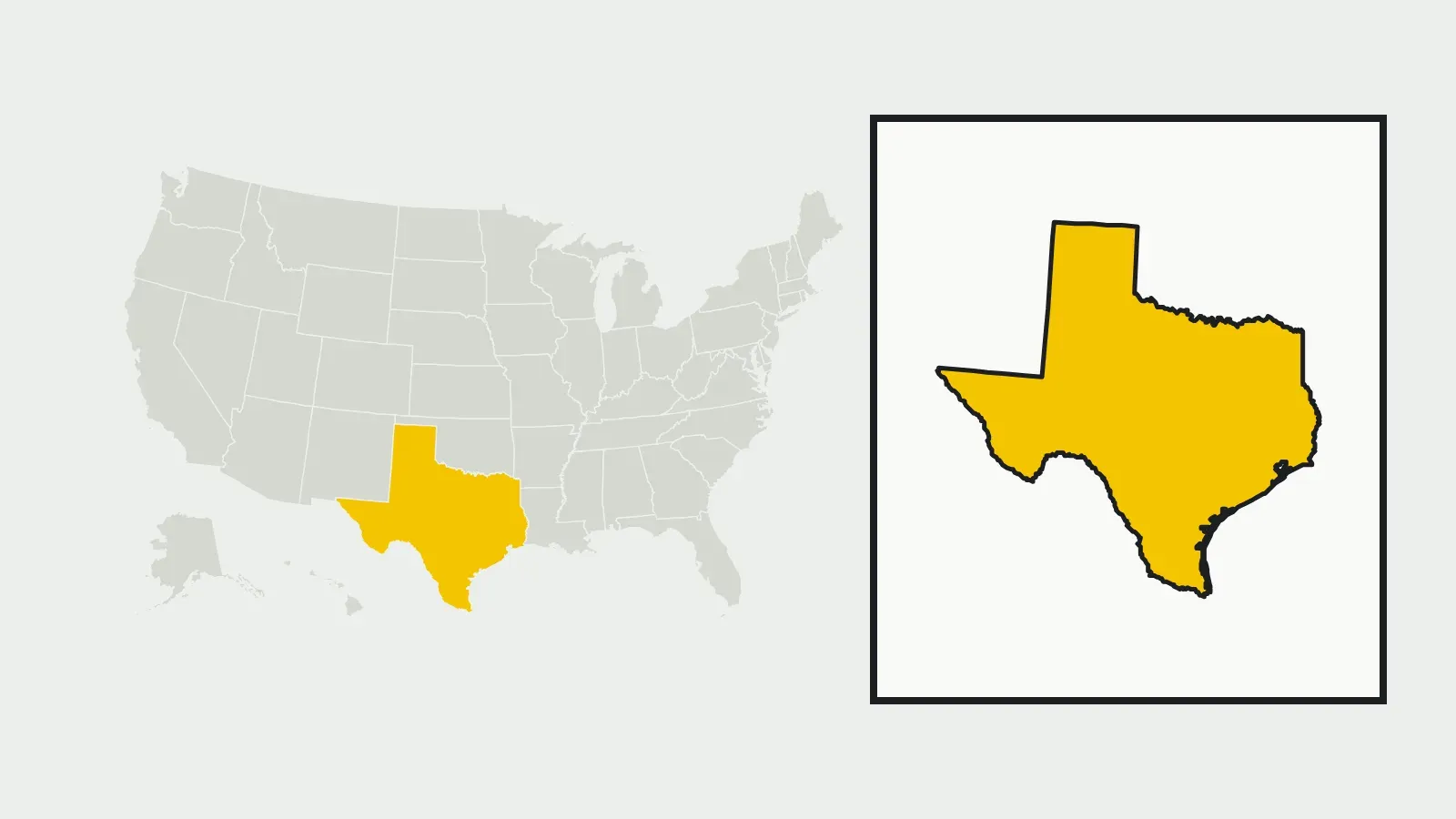
In short
Texas does not license roofers, so the check is yours: ask your city for a permit rule and the contractor for proof of insurance. The federal home energy rebates (HOMES and HEAR) have money set aside for Texas but no launch date as of November 19, 2026. Households at or below 200% of the federal poverty guidelines can apply for free weatherization through a local agency, and the value a solar system adds to your home is exempt from property tax if you file for it.
Texas at a glance
Roofers: no state license, so check locally
Texas does not issue a state license for roofing contractors. A 2025 bill to create one, House Bill 3344, cleared a House committee in April 2025 and then died when the session ended in June. The next regular session starts in January 2027, so for now nobody can show you a state roofing license, and a company that says it holds one is describing a voluntary credential or a city registration.
That puts the work on you. Before you sign, ask the city or county building office whether a roof replacement needs a permit, and ask the roofer for a certificate of insurance sent straight from the insurer. The guide to hiring a contractor has the full list of questions, and the roof replacement project page shows what a good estimate contains.
- Ask your city or county building office whether a roof replacement needs a permit and who pulls it.
- Ask each roofer for a certificate of insurance sent by the insurer, not a photocopy from the roofer.
- Get at least two written estimates that name the shingle brand and line, the underlayment and the flashing.
- Pay a deposit only as the contract allows, and keep the final payment until the cleanup and the permit sign-off.
Weatherization help for lower incomes
The Texas Department of Housing and Community Affairs (TDHCA) runs the Weatherization Assistance Program with money from the U.S. Department of Energy. Local agencies do the work: air sealing, insulation, and related repairs. A household qualifies at or below 200% of the federal poverty guidelines, and categorical eligibility applies if someone in the household receives certain federal benefits.
You apply through your local agency, not through TDHCA directly, and the list of agencies is on the TDHCA weatherization page. The income table changes every year when the poverty guidelines are updated, so use the current one on the TDHCA site instead of a number from an old article. See how weatherization and rebates work for what the work usually includes.
Home energy rebates: planned, not open
The federal Inflation Reduction Act set aside about $690 million for Texas: $346,022,980 for the whole-home HOMES rebates and $344,006,590 for the appliance and electrification HEAR rebates. The State Energy Conservation Office (SECO), part of the Texas Comptroller, hired a program administrator in April 2026. As of the office's status note dated August 21, 2026, rebates are not available and no launch date is set.
SECO advises against signing any agreement that mentions these rebates until the programs launch and a list of approved contractors is published. A contractor who promises a Texas HOMES or HEAR rebate today is promising something that does not exist yet. We list this on the rule changes page and will update this page when SECO opens the programs.
Solar and property tax
Texas Tax Code section 11.27 exempts from property tax the appraised value that a solar energy device adds to your property, when the device is mainly for producing energy used on site. The exemption is not automatic: you file Form 50-123 with your county appraisal district. A rooftop system will not raise your property tax bill the way a room addition would.
The federal 25D tax credit for rooftop solar ended for systems placed in service after December 31, 2025, so the state exemption is now the main public incentive a Texas homeowner can count on. Compare a quote against your own electric rate with the solar payback calculator, and read the rooftop solar project page before you sign.
Insulation targets in Texas climate zones
Texas counties fall in energy code climate zones 2, 3 and 4. For an existing attic, the Energy Star retrofit table (its "Add Insulation to Attic" columns) gives R-49 in zones 2 and 3 if the attic has no insulation, and R-38 if it already has 3 to 4 inches. Zone 4, mostly the Panhandle, calls for R-60 and R-49. Check your county's zone on the Texas A&M Energy Systems Laboratory guide, then measure what you have with the attic insulation gap calculator.
| Texas zone | Attic with none | Attic with 3-4 inches |
|---|---|---|
| 2 and 3 | R-49 | R-38 |
| 4A and 4B | R-60 | R-49 |
Common questions
Do I need a license to hire a roofer in Texas?
You do not need to look for a state license, because Texas does not issue one. You should still ask the roofer for proof of insurance, and ask your city whether the job needs a permit.
Can a Texas roofer cover my insurance deductible?
No. Texas law requires you to pay your deductible, and a contractor who offers to waive or absorb it is breaking the law. Report it to the Texas Attorney General at 800-621-0508.
Are the Texas HOMES and HEAR rebates open?
Not as of November 19, 2026. The State Energy Conservation Office is still designing the programs and has not announced a launch date. Check the SECO page before you buy anything because of a rebate.
Does my solar system raise my Texas property tax?
The value the system adds is exempt under Tax Code section 11.27 if it is mainly for your own use, but you must apply to your county appraisal district.
Sources
- Texas Department of Insurance: Roofing and insurance, know the law
- Texas House bill analysis: HB 3344, reroofing contractors (2025)
- TDHCA: Weatherization Assistance Program
- Texas Comptroller, SECO: Inflation Reduction Act home energy rebates
- Texas Comptroller: Solar and wind-powered energy device exemption guidelines
- ENERGY STAR: Recommended insulation levels for existing homes
- Texas A&M Energy Systems Laboratory: Building guide to residential energy code compliance
Facts checked on November 19, 2026 against the pages above. The SECO status note we read is dated August 21, 2026. Programs and rules change; confirm with the agency before you act.
Next on the job
-
Project
Roof replacement
Tear-off, squares, ventilation and the questions to ask before you sign a bid.
-
Guide
Spot a roofing or storm chaser scam
Door-knockers after a storm, deductible offers and claim assignments: the warning signs and who to call.
-
Guide
How energy rebates and weatherization work
Federal credits ended in 2025. What the Weatherization program and state HOMES and HEEHR rebates do now.