DLCP license required
District of Columbia: help with roof, insulation and solar work
Home improvement contractors need a DLCP license, DOEE runs weatherization, and the federal home energy rebates are delivered through DCSEU programs.
By RoofElm Editorial Team Updated 5 min read
- State roofer license
- License required
- Weatherization help
- Income under 60% SMI
- HOMES and HEAR rebates
- Via DCSEU, income-limited
- Solar property tax
- Personal property exempt
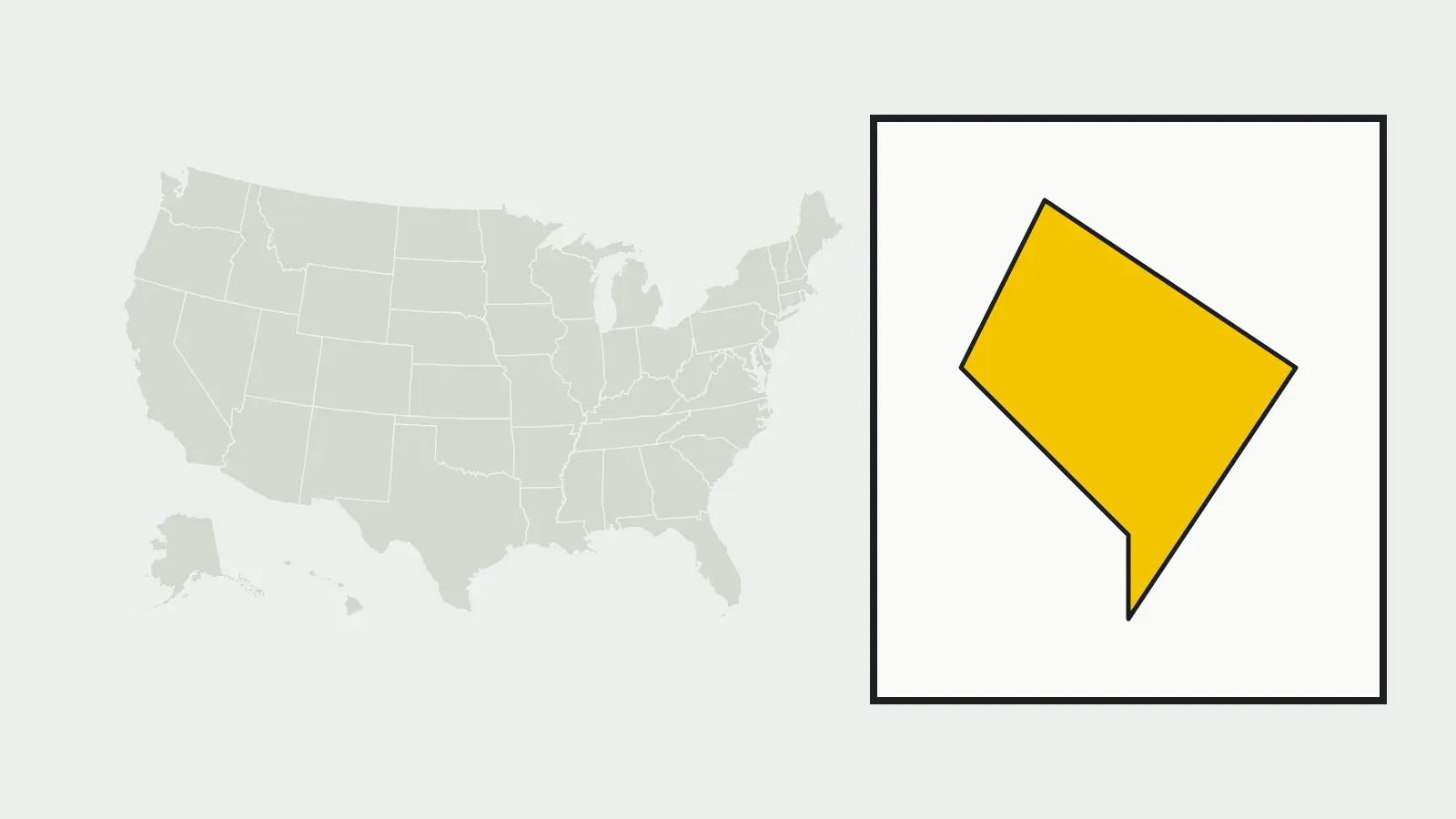
In short
The District requires a license for home improvement work, issued by the Department of Licensing and Consumer Protection (DLCP), with a $25,000 surety bond and liability insurance as conditions. The Department of Energy and Environment (DOEE) runs weatherization for households under 60% of state median income, but its program openings are delayed this fiscal year. The federal HOMES and HEAR (now called HEEHR) rebates reach residents through two Sustainable Energy Utility programs, for lower-income households and affordable housing only.
District of Columbia at a glance
Roofers: a DLCP license
The District has no separate roofing license that we found. Remodeling, repair and similar work calls for a Home Improvement Contractor or General Contractor license from DLCP, and the Office of the Attorney General says an unlicensed contractor is not allowed to do business in the District. Electrical and plumbing work have their own licenses. The DLCP pages we read do not name roofing, so confirm with DLCP that your roofer's license covers a roof job.
A Home Improvement Contractor license requires a certificate of liability insurance, a $25,000 surety bond, a home improvement contract and a designated licensed salesperson. You can verify a license online or by calling DLCP at 202-671-4500. The guide to hiring a contractor has the full list of questions.
- Ask for the DC license number and check it with DLCP, including that it covers roofing work.
- Ask for a certificate of insurance sent by the insurer.
- Ask who pulls the permit before the old roof comes off.
- Get the scope, shingle line and payment schedule in the written contract. The roof replacement project page shows what a good bid contains.
Weatherization help for lower incomes
DOEE runs the Weatherization Assistance Program with U.S. Department of Energy and Health and Human Services funds. A household qualifies with annual income below 60% of state median income, or if a member receives TANF or SSI. For the year starting October 1, 2026, the limit is $63,024 for a one-person household and $167,685 for eight people, and the page lists the sizes between. The home must not be in foreclosure or intended for sale.
You apply to DOEE, not to a contractor. DOEE assigns a nonprofit, which arranges licensed contractors and inspects the work. The page warns that program openings are delayed this fiscal year, so expect a wait. See how weatherization and rebates work for what the work usually includes.
Home energy rebates through DCSEU
DOEE says federally funded home energy rebates are available only through two programs run by the DC Sustainable Energy Utility (DCSEU): the Affordable Housing Retrofit Accelerator for efficiency work, and the Affordable Home Electrification Program for electrification, which is the HEAR rebate (now called HEEHR). Both are for low-income households and eligible affordable multifamily buildings. You apply to DCSEU, not to DOEE.
The electrification page invites residents to apply but lists no enrollment dates, and says projects are subject to DOEE approval and can be cancelled before installation starts. Eligibility is by participation in a listed program, such as SNAP, TANF, SSI or LIHEAP, or by an income chart. Locally funded DCSEU rebates are separate, are open at any income, and are paid after proof of purchase. We track changes on the rule changes page.
Solar and property tax
Under D.C. Code section 47-1508, systems using exclusively solar energy are exempt from the District's personal property tax. The list of exempt real property in section 47-1002 does not mention solar, and the Office of Tax and Revenue's list of home tax reliefs has no solar item. Ask the Office of Tax and Revenue how your assessment treats a rooftop system.
The federal 25D tax credit for rooftop solar ended for systems placed in service after December 31, 2025, so there is no federal credit to count on for a 2026 install. Compare a quote against your own electric rate with the solar payback calculator, and read the rooftop solar project page before you sign.
Insulation targets in the District's climate zone
A federal Building America county guide puts the District of Columbia in energy code zone 4A. The ENERGY STAR retrofit table gives about R-60 for an uninsulated attic in this zone and R-49 for an attic that already has 3 to 4 inches. Measure what you have with the attic insulation gap calculator.
| District zone | Uninsulated attic | Attic with 3-4 inches |
|---|---|---|
| 4A | R-60 | R-49 |
Common questions
Do I need a license to hire a roofer in the District of Columbia?
The District licenses home improvement and general contractors through DLCP, and says unlicensed contractors may not do business here. The pages we read do not name roofing, so ask DLCP that the license covers a roof job.
Who qualifies for DC weatherization?
Households with income below 60% of state median income, or with a member who receives TANF or SSI. DOEE runs the program and says its openings are delayed this fiscal year.
Are the DC HOMES and HEAR rebates open?
They are offered through DCSEU programs for lower-income households and affordable housing. The pages we read list no enrollment dates, so contact DCSEU before you buy anything.
Does my solar system raise my DC property tax?
Solar systems are exempt from the District's personal property tax under section 47-1508. We did not find a real property exemption, so ask the Office of Tax and Revenue.
Sources
- DLCP: Home Improvement Contractor license
- DLCP: General Contractor and Home Improvement Contractor licenses
- DC Office of the Attorney General: How to avoid home improvement scams and disputes
- DOEE: Weatherization Assistance Program
- DOEE: Home energy rebates and consumer protection plans
- DCSEU: Affordable Home Electrification Program
- D.C. Code 47-1508: Personal property exemptions
- D.C. Code 47-1002: Real property exemptions
Facts checked on November 19, 2026 against the pages above. DOEE's rebate page shows only a September 2025 update date and no enrollment dates. Programs and rules change; confirm with the agency before you act.
Next on the job
-
Project
Roof replacement
Tear-off, squares, ventilation and the questions to ask before you sign a bid.
-
Guide
Hire a licensed contractor
Check the license, the insurance and the permit plan before you sign. Licensing is state law.
-
Guide
How energy rebates and weatherization work
Federal credits ended in 2025. What the Weatherization program and state HOMES and HEEHR rebates do now.