License at $5,000
West Virginia: help with roof, insulation and solar work
Contractors need a state license for bigger jobs, weatherization runs through 10 local agencies, and a home energy rebate pilot has started in the south.
By RoofElm Editorial Team Updated 5 min read
- State roofer license
- License required
- Weatherization help
- Income up to 200% FPL
- HOMES and HEAR rebates
- HOMES pilot, waitlist
- Solar property tax
- No exemption found
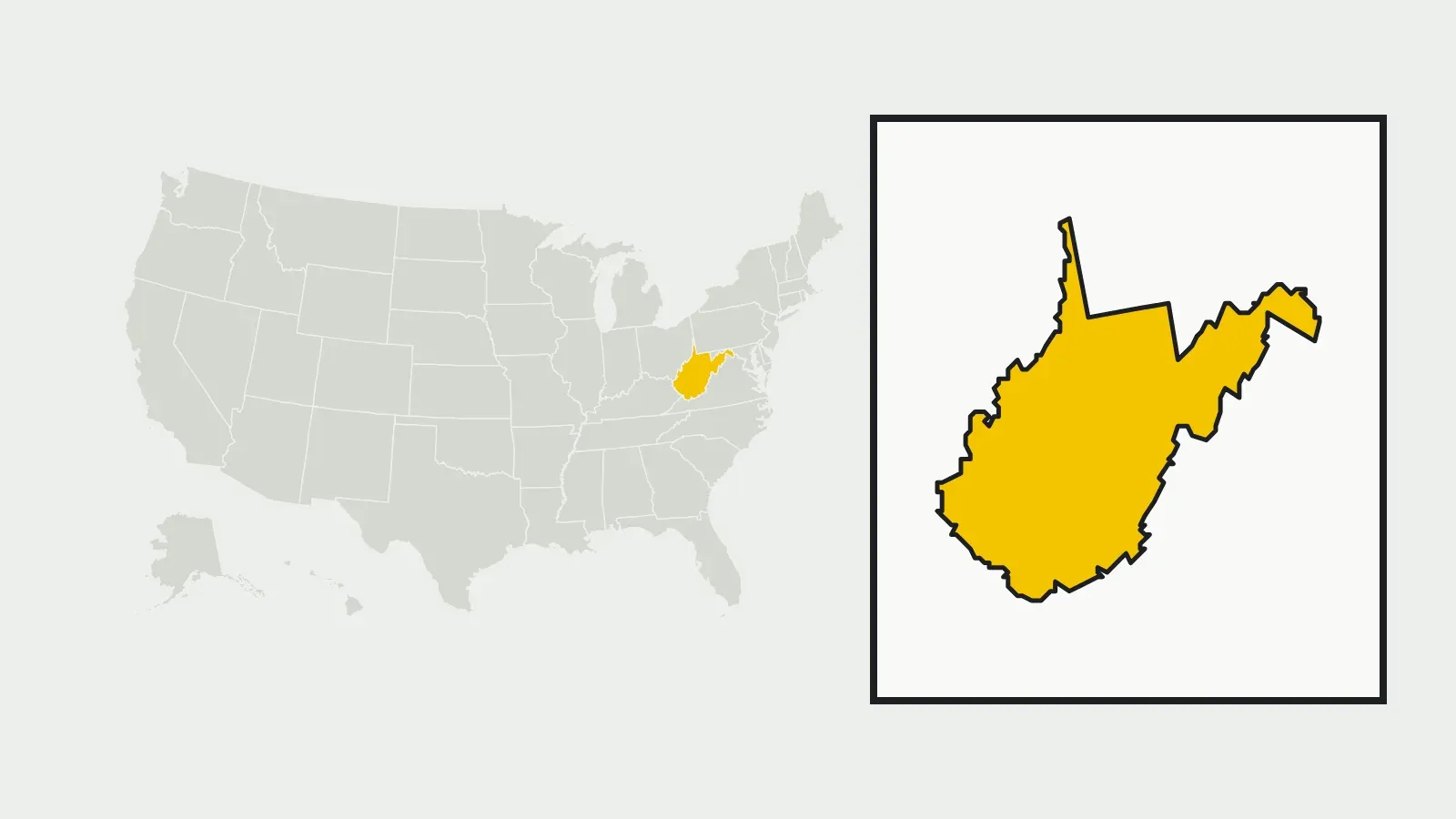
In short
West Virginia requires a contractor license for residential work costing $5,000 or more, issued by the state Contractor Licensing Board. The federal HOMES rebate has a pilot in a select group of southern West Virginia homes, announced August 9, 2026, and HEAR (now called HEEHR) has no launch date. Free weatherization is open to households at or below 200% of the federal poverty level and goes through 10 community action agencies that cover all 55 counties.
West Virginia at a glance
Roofers: a state contractor license
Since June 15, 2021, West Virginia's contractor licensing law has been Code chapter 30, article 42, and the Contractor Licensing Board sits in the Division of Labor. Section 30-42-6 says no one may work as a contractor in the state without a license, and a business needs an officer who holds one. The law defines a contractor as someone who works for compensation on a building or structure where the cost of the job is $5,000 or more for residential work.
The classes include residential contractor, general building contractor and specialty contractor. The sections we read do not name roofing as its own class, so ask the Division of Labor which class a roofer needs and check that the roofer's license matches. Owners or occupants who personally work on their own structure are exempt. A roofer you hire is not.
- Ask for the license number and class, and confirm it with the Division of Labor at 304-558-7890.
- Ask for a certificate of insurance sent by the insurer. The license number must also appear on the contract.
- Ask your city or county whether the roof job needs a permit. See permits and inspections.
- Get the scope, shingle line and payment schedule in a written contract. Licensees must have one for work of $10,000 or more. The guide to hiring a contractor has the full list of questions.
Weatherization help for lower incomes
The West Virginia Department of Economic Development runs the Weatherization Assistance Program through its Community Advancement and Development division. The state plan for 2025 sets eligibility at or below 200% of the poverty level, and the home must not have been weatherized in the past 15 years. You apply through a local agency, which verifies income and the home.
- CHANGE, Incorporated (Weirton) and North Central West Virginia Community Action (Fairmont)
- Community Resources, Incorporated (Parkersburg) and Eastern West Virginia Community Action (Petersburg)
- Southwestern Community Action Council (Huntington) and Coalfield CAP (Williamson)
- PRIDE Community Services (Logan) and MountainHeart Community Services (Oceana)
- Community Action of Southeastern West Virginia (Bluefield) and Nicholas Community Action Partnership (Summersville)
The plan says these 10 agencies together serve all 55 counties. See how weatherization and rebates work for what the work usually includes.
Home energy rebates: a HOMES pilot
The West Virginia Office of Energy runs the state's HOMES program, short for Home Owner Managing Energy Savings. An August 9, 2026 news release said its pilot phase had begun with a select group of homes in southern West Virginia, and that projects will not start statewide until the pilot ends and HOMES is available in all counties. Upgrades named include insulation, air sealing, windows and doors, and heating and cooling.
The Office of Energy's rebate page, modified October 14, 2026, still says applications are not open and offers a waitlist through an online portal. It lists HEAR (now called HEEHR) for low and moderate incomes only, with no launch date. A contractor who promises a rebate today is promising something that is not generally available. We track this on the rule changes page.
Solar and property tax
The list of property exempt from tax in West Virginia Code section 11-3-9 has no entry for rooftop solar. Ask your county assessor how a system is valued on your home. The Code also has a residential solar credit against state personal income tax, section 11-13Z-1, worth 30% of the system cost up to $2,000. We could not confirm that it is still in effect, so ask the State Tax Department before you count on it.
The federal 25D tax credit for rooftop solar ended for systems placed in service after December 31, 2025, so there is no federal credit to count on for a 2026 install. Compare a quote against your own electric rate with the solar payback calculator, and read the rooftop solar project page before you sign.
Insulation targets in West Virginia climate zones
A federal Building America county guide puts 27 West Virginia counties in energy code zone 4A, including Berkeley, Jefferson, Kanawha, Cabell and Wood. The other 28, including Monongalia, Harrison, Marion, Raleigh and Randolph, are in zone 5A. The ENERGY STAR retrofit table gives about R-60 for an uninsulated attic in both zones and R-49 for an attic that already has 3 to 4 inches. Measure what you have with the attic insulation gap calculator.
| West Virginia zone | Uninsulated attic | Attic with 3-4 inches |
|---|---|---|
| 4A | R-60 | R-49 |
| 5A | R-60 | R-49 |
Common questions
Do I need a license to hire a roofer in West Virginia?
For residential work costing $5,000 or more, yes. West Virginia licenses contractors under Code chapter 30, article 42. The sections we read do not name roofing as its own class, so ask the Division of Labor.
Who qualifies for weatherization in West Virginia?
Households at or below 200% of the federal poverty level, in a home not weatherized in the past 15 years. Apply through your local community action agency.
Are the West Virginia HOMES and HEAR rebates open?
Only as a pilot. HOMES began a pilot in select southern homes in August 2026, and the Office of Energy offers a waitlist. HEAR has no launch date.
Does my solar system raise my West Virginia property tax?
We found no exemption for it in the state's exempt property list, section 11-3-9. Ask your county assessor how the system will be valued.
Sources
- West Virginia Code 30-42-3: Definitions (Contractor Licensing Act)
- West Virginia Code 30-42-6: Necessity for license; exemptions
- West Virginia Division of Labor: Contractor license information
- NASCSP: West Virginia PY25 Weatherization Assistance Program state plan
- West Virginia Office of Energy: Home energy rebate programs
- Buckhannon news release: West Virginia Office of Energy launches HOMES pilot (August 9, 2026)
- West Virginia Code 11-3-9: Property exempt from taxation
- West Virginia Code 11-13Z-1: Residential solar energy credit
Facts checked on November 19, 2026 against the pages above. The Office of Energy's rebate page shows a modified date of October 14, 2026. Programs and rules change; confirm with the agency before you act.
Next on the job
-
Project
Roof replacement
Tear-off, squares, ventilation and the questions to ask before you sign a bid.
-
Guide
Hire a licensed contractor
Check the license, the insurance and the permit plan before you sign. Licensing is state law.
-
Guide
How energy rebates and weatherization work
Federal credits ended in 2025. What the Weatherization program and state HOMES and HEEHR rebates do now.