Contractor registration
Vermont: help with roof, insulation and solar work
Roofers must register for bigger jobs, weatherization runs through five local agencies, and small solar systems are exempt from property tax.
By RoofElm Editorial Team Updated 5 min read
- State roofer license
- Registration required
- Weatherization help
- 5 local agencies
- HOMES and HEAR rebates
- Not open yet
- Solar property tax
- Exempt under 50 kW
In short
Vermont does not license roofers, but residential contractors must register with the Office of Professional Regulation before they take a homeowner job worth more than $10,000, and roofing is named in the law. The federal home energy rebates (HOMES and HEAR, now called HEEHR) are not open, and the latest state document we found, from January 14, 2026, still shows them waiting on the U.S. Department of Energy. Free weatherization goes through five local agencies, and a net-metered solar system under 50 kW is exempt from property tax by statute.
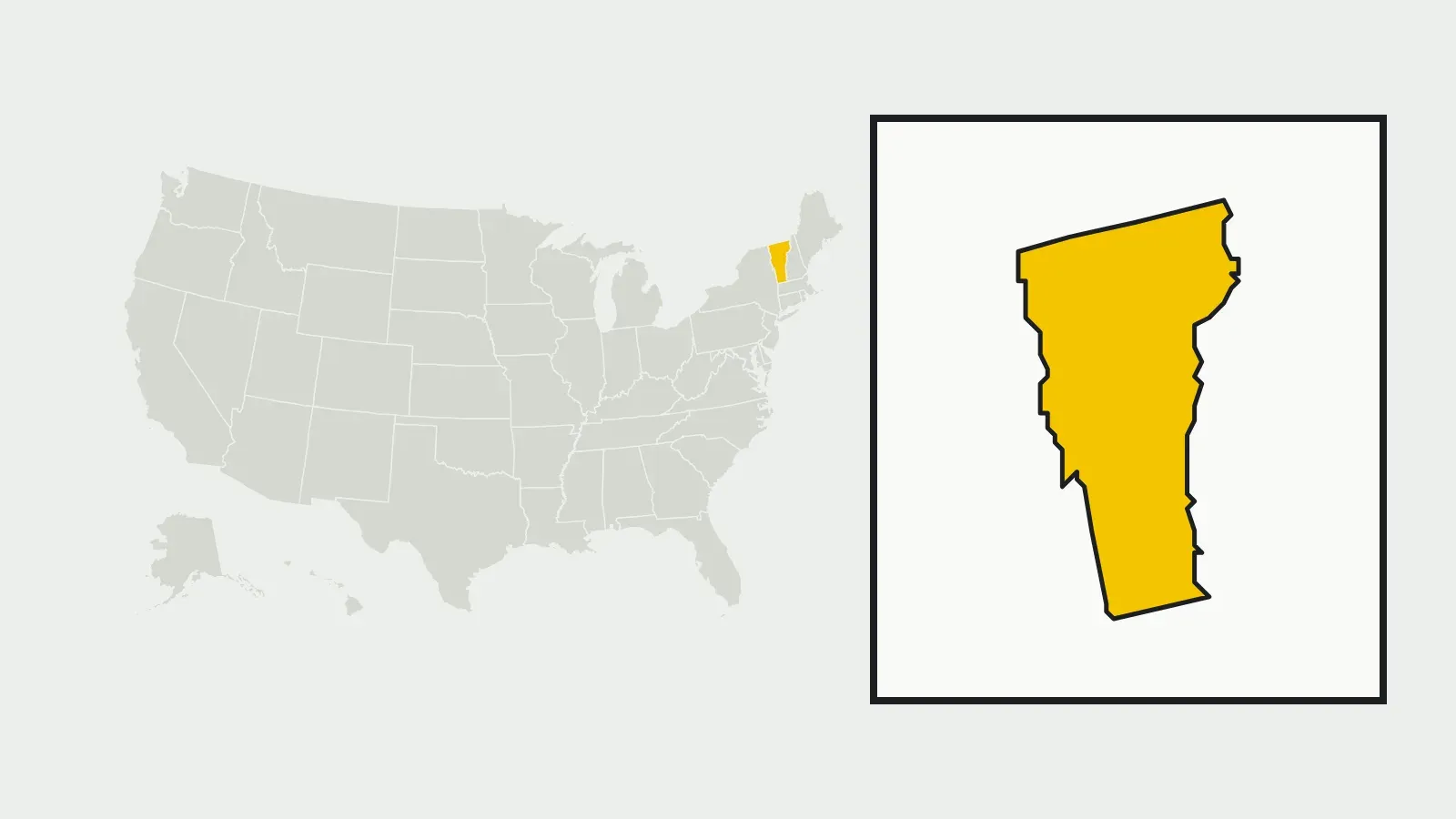
Vermont at a glance
Roofers: registration, not a license
Vermont Act 182 of 2022 created a registration for residential contractors, run by the Office of Professional Regulation (OPR). The state page says registration has been required since April 1, 2023. A contractor must register before contracting with a homeowner for residential construction when the price, labor and materials together, is above $10,000. Roofing is named in the law's definition and is not exempt.
Registration is not a skills test. The act requires liability insurance of $1,000,000 per occurrence and $2,000,000 aggregate, and a written contract before any deposit or work on jobs above $10,000. The contract has to state the price, the start and finish dates, the scope and materials, and how change orders are approved. We read the act as enacted in 2022, so confirm the $10,000 line and any later change with OPR.
- Ask any roofer bidding above $10,000 for the OPR registration, and check it on the OPR site.
- Ask for a certificate of insurance sent by the insurer, not a copy from the roofer.
- Get the written contract before you hand over a deposit, with the scope, materials and change-order rule in it.
- Ask your town about permits. See permits and inspections.
Weatherization help for lower incomes
The Office of Economic Opportunity (OEO), part of the Department for Children and Families, runs the state's Weatherization Assistance Program. You can qualify if you have not had free weatherization in the past 15 years and meet one of these tests: your household income is within the OEO income limits, you are on Seasonal Fuel Assistance, someone in the household gets SSI, or an adult got a Reach Up grant in the past 12 months. The income table is a separate OEO document, so use the current one.
- Central Vermont: Capstone
- Champlain Valley: CVOEO
- Northeast Vermont: NETO
- Southeast Vermont: SEVCA
- Southwest Vermont: BROC
You apply to your regional agency by filling in its application and an employment income form for each job held in the past 12 months. See how weatherization and rebates work for what the work usually includes.
Home energy rebates: planned, not open
A January 14, 2026 briefing from the Public Service Department to the Senate Natural Resources committee lists $29.3 million for the whole-home HOMES rebates and $29.2 million for the HEAR appliance and heat pump rebates. It says no state had DOE approval for either program, that Vermont expected to launch HOMES in 2026 once software approval came through, and that HEAR was on pause awaiting DOE guidance.
We found no newer state notice, so treat both programs as not open as of November 19, 2026, and check with the Public Service Department before you buy anything because of a rebate. We track this on the rule changes page.
Solar and property tax
Vermont law, 32 V.S.A. section 3802(17), exempts from property tax a solar plant with a capacity under 50 kW that is either net-metered or off the grid and serving only its own property. The land is not covered. A town can also vote to exempt renewable energy under section 3845, and the Tax Department lists a tax stabilization contract as a third route. A typical rooftop home system sits well under 50 kW.
The federal 25D tax credit for rooftop solar ended for systems placed in service after December 31, 2025, so there is no federal credit to count on for a 2026 install. Compare a quote against your own electric rate with the solar payback calculator, and read the rooftop solar project page before you sign.
Insulation targets in Vermont's climate zone
A federal Building America county guide puts all 14 Vermont counties in energy code zone 6. For an existing attic, the ENERGY STAR retrofit table gives about R-60 if the attic has no insulation and R-49 if it already has 3 to 4 inches. Measure what you have with the attic insulation gap calculator, and if the roof is coming off, read the roof replacement project page first.
| Vermont zone | Uninsulated attic | Attic with 3-4 inches |
|---|---|---|
| 6 | R-60 | R-49 |
Common questions
Do I need a license to hire a roofer in Vermont?
Vermont has no roofing license, but residential contractors must register with the Office of Professional Regulation before taking a homeowner job above $10,000, and roofing is covered. Ask for the registration and proof of insurance.
Can I cancel a contract I signed at my door in Vermont?
For a home solicitation sale you can cancel until midnight of the third business day after you sign. The law excludes a sale where you asked the seller to come for repair or maintenance.
Are the Vermont HOMES and HEAR rebates open?
We found no sign that they are. The latest state document we found, dated January 14, 2026, shows HOMES waiting on launch and HEAR paused. Check with the Public Service Department.
Does my solar system raise my Vermont property tax?
A net-metered or off-grid solar plant under 50 kW is exempt from property tax under 32 V.S.A. section 3802(17). Confirm with your town listers if you have a larger system.
Sources
- Vermont Act 182 of 2022 (residential contractor registration), as enacted
- Vermont Secretary of State: Residential contractors registration
- Vermont Department for Children and Families: Weatherization
- Vermont Public Service Department: Federal funds status briefing, January 14, 2026
- Vermont Tax Department: Solar valuation for municipal officials
- Vermont Statutes, Title 32, chapter 125 (sections 3802 and 3845)
- Vermont Statutes, Title 9, chapter 63 (home solicitation sales)
- DOE Building America: Guide to determining climate regions by county
Facts checked on November 19, 2026 against the pages above. The newest rebate status we could read is dated January 14, 2026. Programs and rules change; confirm with the agency before you act.
Next on the job
-
Project
Roof replacement
Tear-off, squares, ventilation and the questions to ask before you sign a bid.
-

Guide
Hire a licensed contractor
Check the license, the insurance and the permit plan before you sign. Licensing is state law.
-
Guide
How energy rebates and weatherization work
Federal credits ended in 2025. What the Weatherization program and state HOMES and HEEHR rebates do now.