No state roofer license
Wisconsin: help with roof, insulation and solar work
There is no state roofing license, the federal home energy rebates are open through Focus on Energy, and solar systems are exempt from property tax.
By RoofElm Editorial Team Updated 5 min read
- State roofer license
- None for roofing
- Weatherization help
- 60% SMI or 200% FPL
- HOMES and HEAR rebates
- Open via Focus on Energy
- Solar property tax
- Exempt from property tax
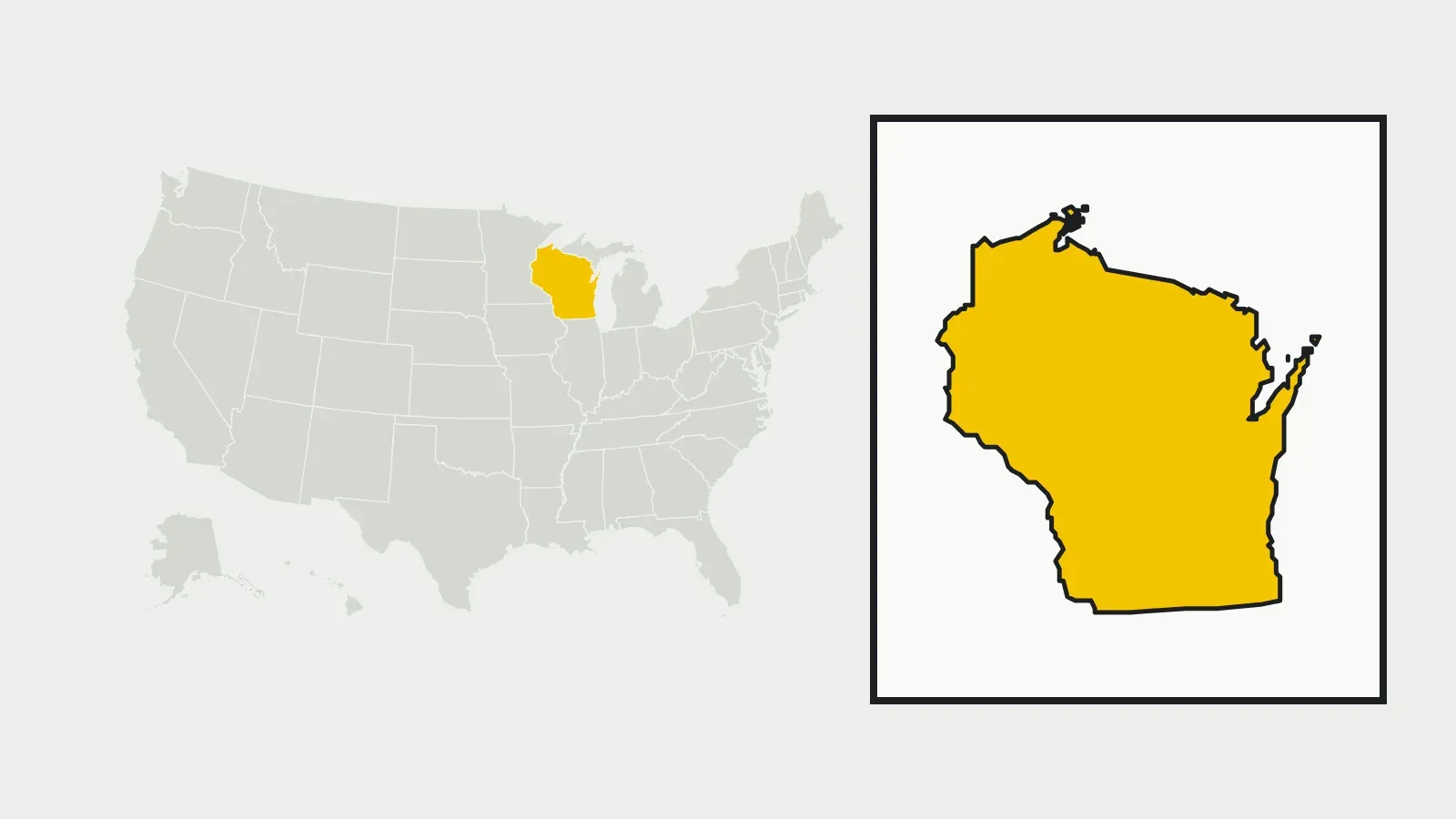
In short
Wisconsin does not license roofers, but anyone who pulls a building permit for a one- or two-family dwelling needs a state Dwelling Contractor certificate or a qualifier, so ask whether your job needs a permit. The federal HOMES rebate has been open since August 1, 2024, and the HEAR (now called HEEHR) contractor rebate since December 18, 2024, both run by Focus on Energy. Weatherization is open to households at 60% of state median income or 200% of the poverty level, whichever is greater.
Wisconsin at a glance
Roofers: no roofing license, check the permit
We found no Wisconsin license or registration that is specific to roofing. The state credential that matters is the Dwelling Contractor certificate from the Department of Safety and Professional Services (DSPS). Under Wisconsin Administrative Code SPS 305.31, no one may obtain a building permit for a one- or two-family dwelling unless the person holds that certificate, or holds or employs a Dwelling Contractor Qualifier. The pages we read do not say whether a roof replacement needs a permit, so that is a question for your city, town or county building office.
The certificate is held by a business, not a person. It requires either a surety bond of at least $25,000 or general liability insurance of at least $250,000 per occurrence, and the statute also asks for workers compensation coverage. A contractor using a bond under $25,000 agrees not to take dwelling work above the bond amount. Owners who live in the dwelling are exempt from the permit-time requirement.
- Ask your building office whether the roof job needs a permit and who applies for it.
- If a permit is needed, ask the roofer for the Dwelling Contractor certificate or qualifier credential, and check it with DSPS.
- Ask for a certificate of insurance sent by the insurer. See the guide to hiring a contractor.
- Get the scope, shingle line and payment schedule in a written contract. See contracts, warranties and lien waivers.
Weatherization help for lower incomes
The Division of Energy, Housing and Community Resources in the Department of Administration runs the Weatherization Assistance Program. Households qualify at up to 60% of state median income or at or below 200% of the federal poverty level, whichever is greater. Cash assistance recipients and residents of USDA-assisted housing can also qualify.
You apply through a local agency with the Home Energy Plus application, the same intake used for energy bill help. Seventeen local subgrantees deliver the work, including community action agencies and county housing authorities. An approved application refers your address for weatherization for 12 months, and an energy audit must be done within that time. See how weatherization and rebates work.
Home energy rebates: open
The Public Service Commission says Wisconsin's HOMES program launched on August 1, 2024, and that Focus on Energy runs it as a program separate from its regular portfolio. Rebates go to eligible customers through IRA Registered Contractors, with higher levels for multifamily homes and low-income households.
- HEAR (now called HEEHR), contractor-installed: launched December 18, 2024, for homeowners and owners of multifamily buildings.
- HEAR (now called HEEHR), retail: since September 30, 2025, rebates on certain ENERGY STAR products bought from stores or websites.
The commission notes that the programs remain operational while federal guidance is under review, so terms can change. Call Focus on Energy at 800-762-7077 before you sign a contract that depends on a rebate, and use a registered contractor. We track changes on the rule changes page.
Solar and property tax
The Wisconsin Department of Revenue says solar and wind energy systems are exempt from general property tax. The exemption does not cover equipment or components that are part of a conventional energy system. The page does not say whether you must apply, so ask your assessor how your rooftop system is treated.
The federal 25D tax credit for rooftop solar ended for systems placed in service after December 31, 2025, so there is no federal credit to count on for a 2026 install. Compare a quote against your own electric rate with the solar payback calculator, and read the rooftop solar project page before you sign.
Insulation targets in Wisconsin climate zones
A federal Building America county guide puts 57 Wisconsin counties in energy code zone 6A, including Milwaukee, Dane, Brown and Waukesha. Fifteen northern counties, including Ashland, Bayfield, Douglas, Oneida and Vilas, are in zone 7A. The ENERGY STAR retrofit table gives about R-60 for an uninsulated attic in both zones and R-49 for an attic that already has 3 to 4 inches. Measure what you have with the attic insulation gap calculator.
| Wisconsin zone | Uninsulated attic | Attic with 3-4 inches |
|---|---|---|
| 6A | R-60 | R-49 |
| 7A | R-60 | R-49 |
Common questions
Do I need a license to hire a roofer in Wisconsin?
We found no state roofing license. Building permits for one- and two-family dwellings require a Dwelling Contractor certificate or a qualifier, so ask your building office whether your roof job needs a permit.
Who qualifies for weatherization in Wisconsin?
Households at up to 60% of state median income or at or below 200% of the federal poverty level, whichever is greater. Apply through a local agency using the Home Energy Plus application.
Are the Wisconsin HOMES and HEAR rebates open?
Yes. HOMES launched August 1, 2024 and the HEAR contractor rebates December 18, 2024, run by Focus on Energy. The Public Service Commission says they remain operational while federal guidance is under review.
Does my solar system raise my Wisconsin property tax?
The Department of Revenue says solar and wind energy systems are exempt from general property tax, apart from parts of a conventional energy system. Ask your assessor to confirm.
Sources
- Wisconsin DSPS: Dwelling Contractor credential
- Wisconsin DSPS: Dwelling Contractor Qualifier credential
- Wisconsin Statutes 101.654(2): Certificate of financial responsibility
- Wisconsin Public Service Commission: Federal funding, home energy rebates
- Wisconsin DEHCR: PY25-26 Weatherization Assistance Program master file
- Wisconsin Department of Revenue: Renewable energy FAQ
- DOE Building America: Guide to determining climate regions by county
- ENERGY STAR: Recommended insulation levels for existing homes
Facts checked on November 19, 2026 against the pages above. The Public Service Commission page we read gives program launch dates and no later update date. Programs and rules change; confirm with the agency before you act.
Next on the job
-
Project
Roof replacement
Tear-off, squares, ventilation and the questions to ask before you sign a bid.
-
Guide
Hire a licensed contractor
Check the license, the insurance and the permit plan before you sign. Licensing is state law.
-
Guide
How energy rebates and weatherization work
Federal credits ended in 2025. What the Weatherization program and state HOMES and HEEHR rebates do now.